To dream that one is awake at night, lying down in bed, foretells excessive cares to the well-off, but it is good for the poor and for those who are setting upon somebody.
Passage Book II
3 readings from 2 sources.
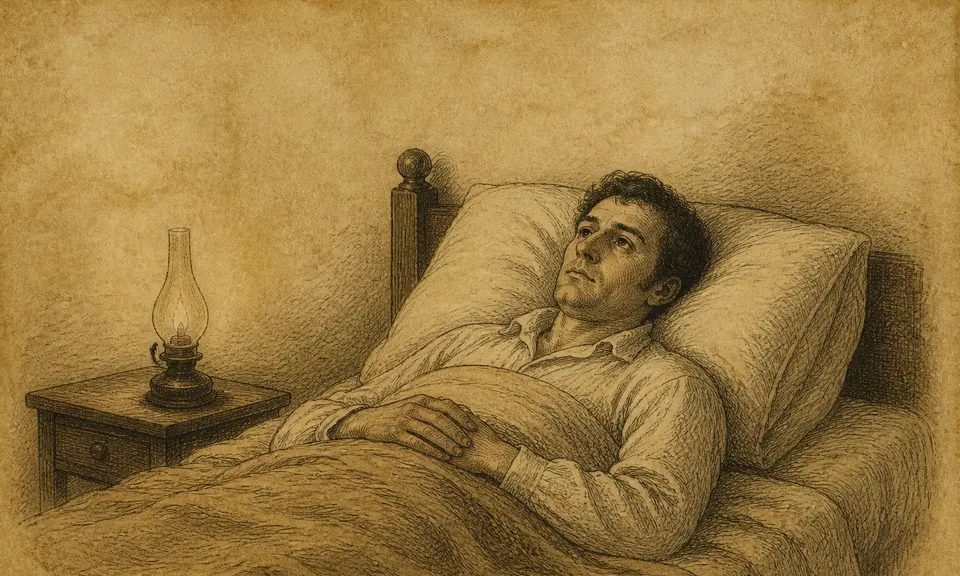
Artemidorus reads sleeplessness by the dreamer's means and gives a reason for each side. To dream that one is awake at night, lying down in bed, foretells excessive cares to the well-off, but it is good for the poor and for those who are setting upon somebody: the one sort will have no leisure, while the others, setting upon somebody with much forethought, will not miss their mark. Waking is working time for him, and all that matters is what a man has it for. an-Nabulsi divides nobody and gives sleeplessness one heavy thing: it is the loss of the dearest of created beings to him, whether family or child or beloved, so it points to separation from loved ones. The Greek book asks who it is that is not sleeping; the Arabic does not — there the waking night is a grief that has not arrived yet.
This paragraph was generated by a model. It sums up the sources above, comes from none of them and is attributed to no one.
To dream that one is awake at night, lying down in bed, foretells excessive cares to the well-off, but it is good for the poor and for those who are setting upon somebody.
Passage Book II
For the one sort will have no leisure, while the others, setting upon somebody with much forethought, will not miss their mark.
Passage Book II
It is in a dream the loss of the dearest of created beings to him, whether family or child or beloved, so it points to separation from loved ones.
Section letter sin