To dream of shaving the whole head is good for the priests of the Egyptian gods and for jesters and for those who are used to shaving, but bad for all the rest.
Passage Book I, 20
4 readings from 3 sources.
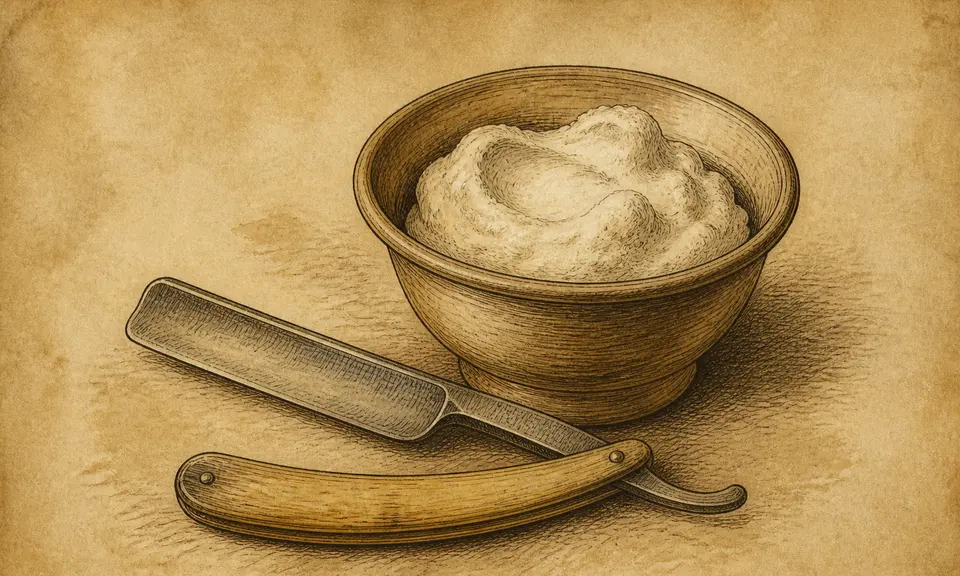
Miller reads the shave as self-command: being shaved means letting imposters defraud you, shaving yourself means running your own business and household, a smooth face means quiet and a conduct nobody questions, a rough one squalls on the matrimonial sea, and a grey beard having no sense of justice left towards those with claims on you. an-Nabulsi begins with a rule Miller has no use for: the shave is read against the dreamer’s own habit. For a man who shaves his head anyway it is sound; for a man who lets his hair grow it means captivity in war and the loss of money in peace. Season and place decide the rest — shaved in summer, a benefit and relief from pains of the head; in winter, cares, fines and illness; on the pilgrimage, an atonement and the paying of debts. And his hardest lines are for a woman: a shaved head means her husband divorces her or dies, and a husband who crops her hair is shutting her in the house, for a bird whose wing is clipped stays in its nest. Artemidorus has the same rule and reaches it first: shaving the whole head is good for the priests of the Egyptian gods, for jesters and for anyone used to shaving, and bad for everyone else. For men at sea it plainly means shipwreck, and for the sick that they will be driven to the utmost danger and yet not die — because men shave after a shipwreck and after rising from a great illness, while the dead do not.
This paragraph was generated by a model. It sums up the sources above, comes from none of them and is attributed to no one.
To dream of shaving the whole head is good for the priests of the Egyptian gods and for jesters and for those who are used to shaving, but bad for all the rest.
Passage Book I, 20
For those at sea it plainly means shipwreck, and for the sick that they will be driven to the utmost danger, yet will not die; for men shave after a shipwreck and after rising from a great illness, but the dead do not.
Passage Book I, 20
Whoever shaves his head in a dream — it goes back to the dreamer's own custom in waking, and so does the trimming of it. If he sees that he shaved his head, he spends his money in obedience to God; and if the shaving was in the summer season and it is his custom to shave his head then, a benefit comes to him, and perhaps it points to rest and to recovery from pains of the head and the eye. And if he sees his hair shaved and that was in the winter season, perhaps it points to cares and troubles and fines and illnesses; and perhaps shaving out of its place points to blight and to fines. Shaving the head is the discharging of a trust and safety from fear, and so is cropping it. Shaving it on the pilgrimage is the paying of a debt, and with it he gets a victory; and trimming is safety from fear. And if he shaved it outside the pilgrimage, it is less than that in soundness; and if its owner was in distress or in debt, he is relieved. And it is said: if he shaved outside the season and was a rich chief, he grows poor; and if he was in debt, God pays his debt. And perhaps it points to his veil being torn and to his chief being removed by cunning or by death. And if he was one who wears weapons, his force and the awe of him go. And if he was rich, his money is lessened; and if he was in debt, his debts are paid. If he sees that his head is shaved, he wins over his enemies and gets strength and honour; and if he shaved his head, he discharges a trust. Whoever sees as if he cuts the hair of his head falls from his standing and his esteem. If he sees as if he shaves his head, he falls into an illness. And if a man sees as if his head is shaved, it is sound for whoever had the custom of shaving his head. Whoever sees as if he shaves his head with his own hand pays his debt. Whoever sees a woman's head shaved — her husband divorces her, or dies, or parts from her. And if she sees that her husband cropped her hair or shaved her head, it is his shutting her up in her house — do you not see that a bird whose wing is clipped stays in its nest? And it is said that if she shaved it herself, she tears her own veil. And if his shaving and cropping of it was in a state of soundness in her religion, and there were words with it from which good could be read, that was the paying of her debt and the discharging of a trust in her hand — if she saw all of that in the sanctuary. And if somebody called her to have her hair cropped, he is calling her husband to other women, worse than she, and there will be an uproar between her and the one who saw it. Whoever sees his wife's braids cut off — she will never bear; and whoever cuts his hair, his strength is lessened. Whoever sees half his beard shaved grows poor and his standing goes: if a young man he does not know shaved it, it goes at the hand of an enemy he knows, his namesake or his like; and if it was an old man, his standing goes at the hand of an overbearing man of no lineage. And if he sees that it was shaved off, it is the going of his face in his living and of his power over his money, in foolishness. And shaving is easier than plucking; and perhaps there is soundness in the plucking for part of his affair, if it does not disfigure the face — only that soundness comes to him with hardship. And if he took hold of it and cropped what stood out beyond his fist, he is a man who pays the alms on his money. Whoever sees that he holds his uncle's beard and clips it until he has taken it all eats his uncle's inheritance, and he will have no heir but him; and if he took something of it, he inherits from him in that measure. And the shaving of the beard is the going of money and standing; and it is said that shaving the beard is cunning and deceit, or a blight on his piety, or his being pulled up before he came right, or the sudden death of his child or his wife. Whoever sees that he shaves his head as he shaves it in waking, and that it is right for him, and walks among people — he grows rich and provides for his household. And if he was one who lets his hair grow and does not shave it: if he was at war, he is taken captive and his head is cut off; and if he was at peace, his money goes and his veil is torn, or he parts from his chief. Whoever sees that he shaves his head and was on a campaign or a pilgrimage, or in the days of the season, or in the month of the pilgrimage — that is an atonement for his sins and a payment of his debts and the going of his cares and his griefs. And if the shaving was outside these times and it was in winter, he is removed from his headship, or his money goes; and it is said, if he had a father, the father dies and his money goes; and it is said, if he had a mother, she dies — and so with the child. And if a woman sees that her head was shaved, it points to her death, or the death of her husband, or the tearing of her veil; and it is said she gets good from her husband. Whoever sees that his moustache was shaved or trimmed gets good. Whoever sees his beard and his head both shaved: if he was ill, he recovers; if he was in debt, his debt is paid; if he was in care, his care goes — and it is said that this is disliked in a dream. Whoever sees that he shaved the back of his neck — a debt is paid for him and nobody notices it. Whoever sees that he shaves the hair of his belly — God brings him what he pays his debt with and sets his affair right. Whoever sees that he used a depilatory and the depilatory took the hair of his pubis: if he was rich, his money and his power go, and it is said his money goes in the buying of property; and if he was poor, he grows rich and is relieved. And if the depilatory took part of it and left part, part of his distress is relieved and part stays, and part of his money goes, or part of his bounty and his power passes and part stays. Whoever sees that he shaved the pubis with a razor gets good from his wife; and if a woman sees that, she gets good from her husband.
Section letter ḥa
To dream that you are being shaved, portends that you will let imposters defraud you. To shave yourself, foretells that you will govern your own business and dictate to your household, notwithstanding that the presence of a shrew may cause you quarrels. If your face appears smooth, you will enjoy quiet, and your conduct will hot be questioned by your companions. If old and rough, there will be many squalls or, the matrimonial sea. If your razor is dull and pulls your face, you will give your friends cause to criticize your private life. If your beard seems gray, you will be absolutely devoid of any sense of justice to those having claims upon you. For a woman to see men shaving, foretells that her nature will become sullied by indulgence in gross pleasures. If she dreams of being shaved, she will assume so much masculinity that men will turn from her in disgust.