Sesame and linseed and mustard are good for physicians alone; on the rest they bring sharp pains, and they bring hidden things to light.
Passage Book I, 68
2 readings from 2 sources.
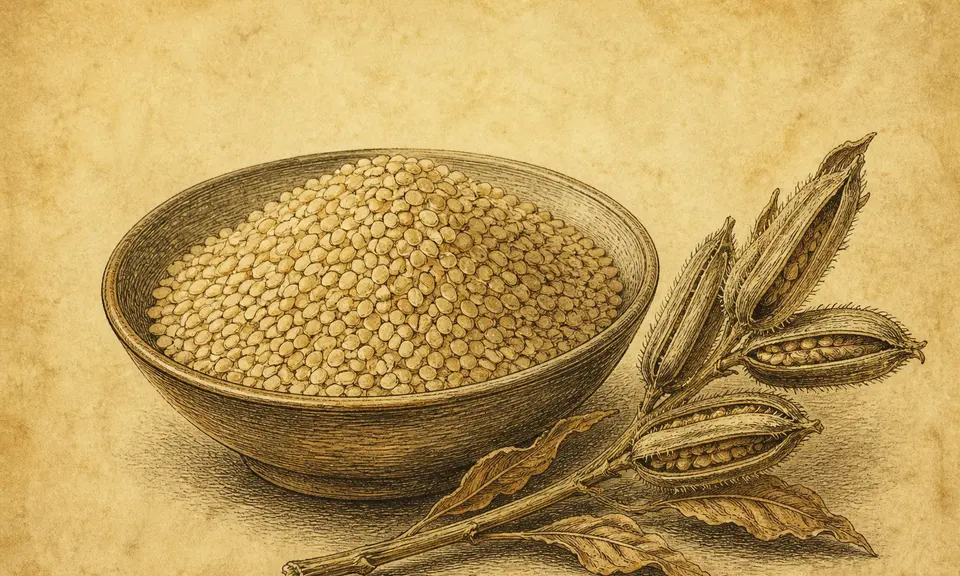
Two items that claim the opposite about the same grain. Artemidorus counts sesame together with linseed and mustard and allows them to one trade only: they are good for physicians alone, on the rest they bring sharp pains — and alongside that they bring hidden things to light. an-Nabulsi sees in sesame neither pain nor a secret given away but provision and lawful wealth, and the same holds for its pressed oil and its flour, which are wealth in honour and strength; and he adds that so are the rest of the grains. The Greek reading makes the oily seed a medicine and an exposure; the Arabic makes it an honest income. And since both books extend the claim to the whole group of seeds, the contradiction is not about sesame but about grain in general.
This paragraph was generated by a model. It sums up the sources above, comes from none of them and is attributed to no one.
Sesame and linseed and mustard are good for physicians alone; on the rest they bring sharp pains, and they bring hidden things to light.
Passage Book I, 68
It is in a dream provision and lawful wealth, and likewise its pressed oil and its flour are wealth in honour and strength, and so are the rest of the grains.
Section letter sin