Harbours always mean friends and benefactors, and so do all anchorages; but headlands and roadsteads mean those whom we love out of necessity and not by choice, men who for their part do us no good willingly either.
Passage Book II, 23
2 readings from 2 sources.
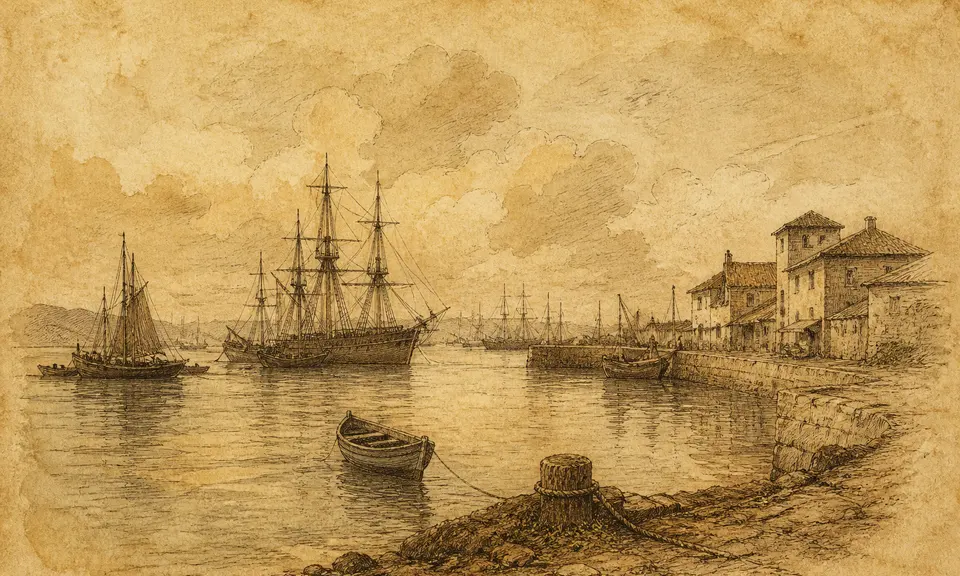
Artemidorus reads a harbour as a person rather than a place. Harbours always mean friends and benefactors, and so do all anchorages — and then he adds the distinction that qualifies the whole reading: headlands and roadsteads mean those whom we love out of necessity and not by choice, men who for their part do us no good willingly either. Shelter taken out of need is therefore not a friend. Miller reads the port as a place and the dream of it as a journey: to visit a seaport denotes that you will have opportunities of travelling and acquiring knowledge, but there will be some who will object to your anticipated tours. Two lines, each with its own objection — in the Greek the refuge itself is unreliable, in the American it is the people who do not want you to go.
This paragraph was generated by a model. It sums up the sources above, comes from none of them and is attributed to no one.
Harbours always mean friends and benefactors, and so do all anchorages; but headlands and roadsteads mean those whom we love out of necessity and not by choice, men who for their part do us no good willingly either.
Passage Book II, 23
To dream of visiting a seaport, denotes that you will have opportunities of traveling and acquiring knowledge, but there will be some who will object to your anticipated tours.