To be poor benefits no one, and least of all orators and all men of letters; for we say alike of being poor and of being unable to utter a word that a man is at a loss.
Passage Book IV
3 readings from 3 sources.
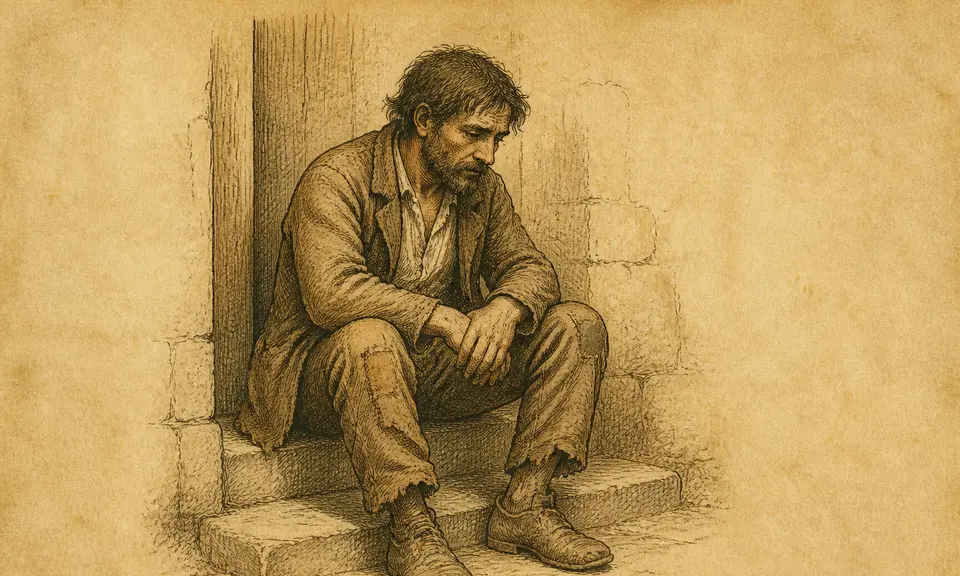
Miller gives poverty one line and no comfort in it: the dreamer, or a friend, appearing poor means worry and losses. Artemidorus allows poverty nothing, and takes his reason from the language: to be poor benefits no one, and least of all orators and all men of letters, for we say alike of being poor and of being unable to utter a word that a man is at a loss. an-Nabulsi opens with the reversal — in a dream poverty is riches — and backs it with the verse in which Moses calls himself poor for whatever good God sends down, which the commentators read as barley bread. From there: a man begging prays much, because beggars do; beggars in a place mean a rich man's death and alms going out; and giving to a beggar means money got without weariness, because asking is profit with no capital.
This paragraph was generated by a model. It sums up the sources above, comes from none of them and is attributed to no one.
To be poor benefits no one, and least of all orators and all men of letters; for we say alike of being poor and of being unable to utter a word that a man is at a loss.
Passage Book IV
In a dream it is riches: whoever sees that he is poor gets much food, by His word, exalted be He: “my Lord, I am poor for whatever good You send down to me” — it is said the good there is barley bread. And whoever sees that he is poor and begs of people prays much, because beggars pray much; and it is said beggars in a place are a sign of a rich man's death and of alms going out. And whoever gives to a beggar in a dream attains money without weariness, because gain by asking is profit with no capital and taking with no giving; and it is said whoever sees that he is poor attains good.
Section letter fa
To dream that you, or any of your friends, appear to be poor, is significant of worry and losses. See Pauper.