The oak means a rich man, because it gives nourishment; for the Arcadians used to eat its fruit.
Passage Book II, 25
5 readings from 3 sources.
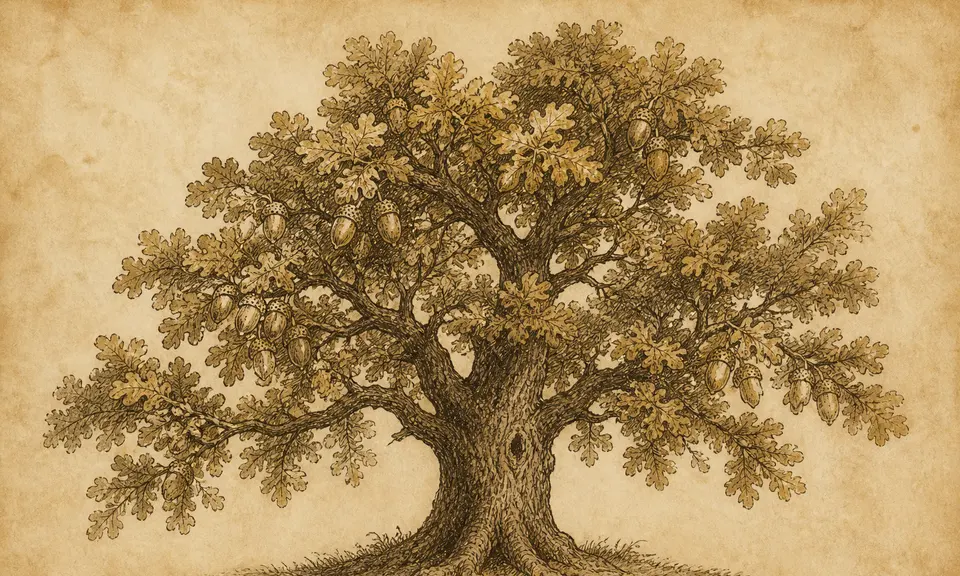
Both books start with abundance and then look in opposite directions. A forest of oaks in Miller signifies great prosperity in all conditions of life, an oak full of acorns is increase and promotion, a blasted oak is a sudden and shocking surprise, and for sweethearts the tree means they will soon begin life together under favorable circumstances. an-Nabulsi also finds profitable wealth and firm might in it, which is a rare agreement on these pages, but he arrives there by placing the tree first: the oak is among the trees of the mountains and the valleys. Growing where nobody lives, it can point to keeping company with the people of heedlessness, or with those who turn aside in the wastelands, or else to the places of the righteous who have withdrawn. The same tree in the same empty country carries both of those at once, and the reading does not choose between them. Artemidorus reads the tree as a person and gives both of his reasons: the oak means a rich man, because it gives nourishment, for the Arcadians used to eat its fruit; and it indicates an old man, because of its many years, or time itself for the same reason. Miller counts the acorns, the Greek book counts the years, and the Arabic book asks who else is out there.
This paragraph was generated by a model. It sums up the sources above, comes from none of them and is attributed to no one.
The oak means a rich man, because it gives nourishment; for the Arcadians used to eat its fruit.
Passage Book II, 25
It also indicates an old man, because of its many years.
Passage Book II, 25
The oak means a rich man, because it is nourishing, or an old man, because it is long-lived, or time itself, for the same reason.
Passage Book II, 25
It is among the trees of the mountains and the valleys, and the seeing of it in a dream points to profitable wealth and to firm might. And perhaps it points to keeping company with the people of heedlessness, or with those who turn aside in the wastelands, or to the places of the righteous who have withdrawn.
Section letter sin
To dream of seeing a forest of oaks, signifies great prosperity in all conditions of life. To see an oak full of acorns, denotes increase and promotion. If blasted oak, it denotes sudden and shocking surprises. For sweethearts to dream of oaks, denotes that they will soon begin life together under favorable circumstances.