Mother

4 readings from 3 sources.

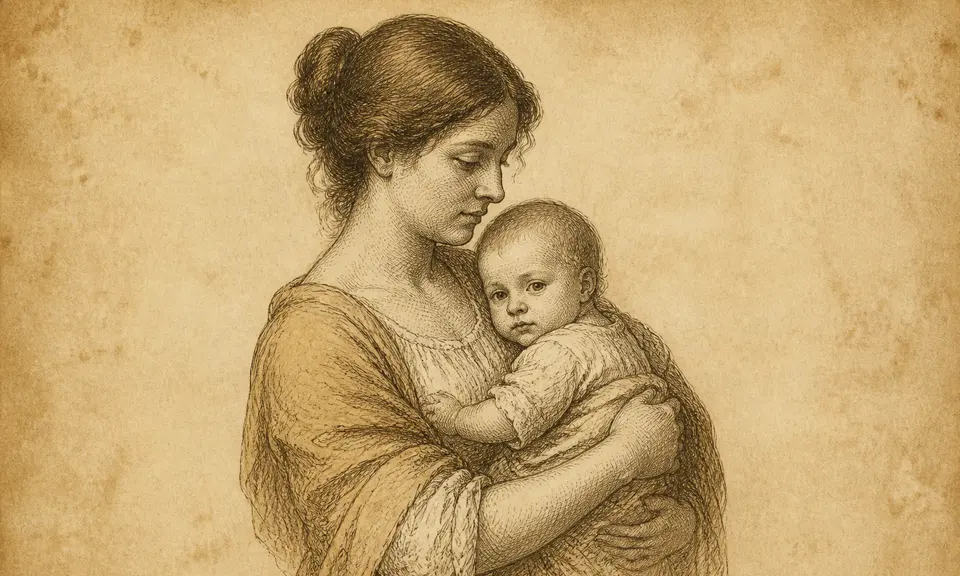
The image was generated by a model. It is not a period engraving and comes from none of the sources.

Miller reads the mother as she appears: seen at home she means pleasing results from any enterprise, held in conversation good news soon, emaciated or dead sadness caused by death or dishonour, calling the dreamer that he is derelict in his duties, and crying as if in pain her illness or an affliction threatening him. Artemidorus reads the mother as a man’s trade, and twice over. Dreaming that one’s mother or wife is ill brings weak and disordered work from one’s craft — and this, he says, is not even in dispute: all agree that a craft is like a mother, since it feeds a man, and like a wife, since it is most his own. The second is a case in which a crime turns into a day’s work: a man dreamed that he was beating his mother, which was against the law, and none the less it profited him, since he happened to be a potter — we call the earth mother, and the potter works it by beating it, and so he did a great deal of work. an-Nabulsi states a rule of his craft first — in interpretation the mother has more claim on a man than his father — and then reads one scene: a man who sees his mother give birth to him dies, if he was sick, because the dead are wrapped in cloths as an infant is; and if he was well, a poor man's means widen and a rich man's dealings narrow, because an infant's keep falls on somebody else and an infant is narrowed in everything.

This paragraph was generated by a model. It sums up the sources above, comes from none of them and is attributed to no one.

Greek dream book

Of this kind too is dreaming that one's mother or wife is ill, which brings weak and disordered work from one's craft. For this is not even in dispute: all agree alike that a craft is like a mother, since it feeds a man, and like a wife, since it is most his own.

Passage Book I, 2

For instance, a man dreamed that he was beating his mother. It was against the law, but none the less it profited him, since he happened to be a potter; and we call the earth 'mother', and the potter works it by beating it. And so he did a great deal of work.

Passage Book IV

Ὀνειροκριτικά (Oneirokritika)

Artemidorus of Daldis; edited by Rudolf Hercher

second century; Hercher’s edition 1864 · Greco-Roman

the source of the ancient tradition itself, which the others draw on

About this source

Five books of second-century Greek prose, not an alphabetical dictionary: the readings sit inside argued chapters and the author says of each one why it reads as it does. It is the source the other European and Arabic dream books draw on, including where they do not name it.

Rights: public domain

Where the text is from: https://archive.org/details/bub_gb_CRwTAAAAQAAJ

Arabic dream book

In a dream she has more claim on him, in the rules of interpretation, than his father has. If he saw that his mother had given birth to him: if he was sick, it points to his death, because the dead man is wrapped in cloths as the little child is wrapped; and if he was well, then if he was poor his means are widened, because the little child's keep falls on somebody else, and if he was rich his dealings and his earnings are narrowed, because the little child is narrowed in all his states.

Section letter alif

The Perfuming of Mankind in the Interpretation of Dreams

Abd al-Ghani al-Nabulsi

before 1731; first printed Cairo 1858 · Arab-Islamic

carries the ancient tradition after Artemidorus

About this source

An Arabic dream book by the Damascene scholar al-Nabulsi, an alphabetical dictionary of two and a half thousand headwords. It draws on the ancient tradition directly: Artemidorus was translated into Arabic by Hunayn ibn Ishaq in the ninth century. The readings here almost always address the dreamer’s standing, property and faith rather than their feelings.

Rights: public domain

Where the text is from: https://shamela.ws/book/1217

Miller

To see your mother in dreams as she appears in the home, signifies pleasing results from any enterprise. To hold her in conversation, you will soon have good news from interests you are anxious over. For a woman to dream of mother, signifies pleasant duties and connubial bliss. To see one's mother emaciated or dead, foretells sadness caused by death or dishonor. To hear your mother call you, denotes that you are derelict in your duties, and that you are pursuing the wrong course in business. To hear her cry as if in pain, omens her illness, or some affliction is menacing you.

Ten Thousand Dreams Interpreted; Or, What's in a Dream

Gustavus Hindman Miller

1901 · American Victorian

carries fragments of the ancient tradition without its system

About this source

An American dream book, the only one here that knows the telephone, the railroad or the elevator. Doctrinally it is the most degraded: it keeps fragments of the ancient tradition without the system that once held them together.

Rights: public domain

Where the text is from: https://www.gutenberg.org/ebooks/926