Grass and trees in full growth: the household flourishes.
Section Land, mountains, stones and trees
32 readings from 7 sources.
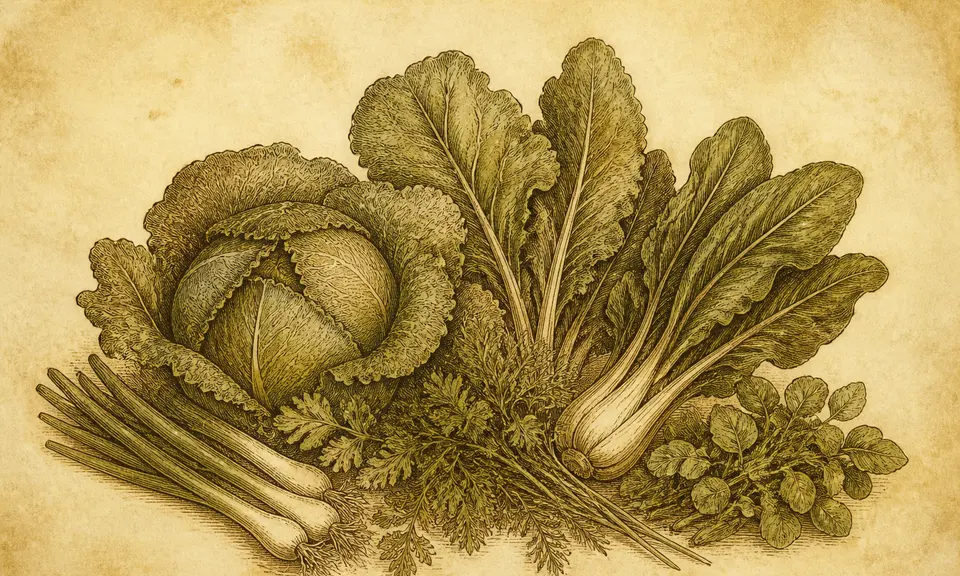
Jagaddeva calls shoots, sprouts and leaves unwholesome as a rule; the Duke of Zhou says eating any kind of vegetable brings ill fortune and then names the worst of them, since onions and leeks are quarrels, shallots a serious injury and garlic calamity, while sowing vegetables is long life. The Petersburg book makes the distinction the others do not: juicy greens that nourish the body are health, strong-smelling ones a quarrel, sweet ones good and bitter ones bad. Artemidorus sorts them by the same nose and says what the smell does, for vegetables that smell after they are eaten bring hidden things to light and make hatred between people who live under one roof — cabbage, chicory, leeks — while the artichoke, being thorny and sharp, means pains and idleness, since it gives no nourishment. an-Nabulsi reads leaves as clothing, with one exception, the leaf of the fig, which is sorrow. Miller reads the leaf and not the plate and keeps only the two states: leaves denote happiness and wonderful improvement in business, and withered leaves false hopes and gloomy forebodings. The Kaluga book is the one that distrusts the picking, since vegetables seen mean tears and to pluck them means an oath, gathering herbs means timidity and want, and carrots eaten mean illness — with one exception, cedar leaves plucked, which mean good children.
This paragraph was generated by a model. It sums up the sources above, comes from none of them and is attributed to no one.
Grass and trees in full growth: the household flourishes.
Section Land, mountains, stones and trees
Breaking off bamboo shoots and bringing them home: a daughter will have a child.
Section Land, mountains, stones and trees
Seeing bamboo shoots: descendants are added.
Section Land, mountains, stones and trees
inauspicious
Eating any kind of vegetable: ill fortune comes.
Section Food and drink, wine, meat, melons and vegetables
Eating aubergine: your wife will have a child.
Section Food and drink, wine, meat, melons and vegetables
Eating onions and leeks: quarrels and fighting.
Section Food and drink, wine, meat, melons and vegetables
Eating shallots: a serious injury comes.
Section Food and drink, wine, meat, melons and vegetables
Eating garlic: calamity comes.
Section Food and drink, wine, meat, melons and vegetables
inauspicious
Eating vegetables and finding them yellowed: inauspicious.
Section Food and drink, wine, meat, melons and vegetables
highly auspicious
Sowing vegetables: long life, greatly auspicious.
Section Fields, gardens, the five grains and ploughing
Sprouting shoots: evil matters one after another.
Section Fields, gardens, the five grains and ploughing
Those vegetables that smell after they are eaten bring hidden things to light and make hatred between people who live together, such as cabbage, chicory and leeks.
Passage Book I, 67
The artichoke, being thorny and sharp, means pains; and idleness as well, for it gives no nourishment.
Passage Book I, 67
Those vegetables that are scraped clean, being eaten raw, mean harm, because of the casting away of what is superfluous — such as lettuces and anything else like them.
Passage Book I, 67
Eating shoots, panicles, fruits, pith, sprouts, bast and leaves of trees in a dream is as a rule unwholesome for a man.
In a dream it points to clothing, except the leaf of the fig, for that is sorrow. And whoever sees that he eats a written leaf of the Qur'an comes by a provision.
Section letter waw
To plant basil, or take it in your hands, means an oncoming illness.
To pluck cedar leaves in a dream means good children.
To eat carrots in a dream means illness.
Vegetables seen in a dream mean tears; to pluck them means an oath.
To gather herbs in a dream means timidity and want.
To see a mushroom in your own house means a successful outcome in the business you have begun.
To eat various greens of a strong smell signifies a quarrel.
Greens juicy and rich, nourishing the body and cleansing the blood, mean health.
Vegetables seen in a dream mean tears.
To eat sweet vegetables in a dream is a good sign; sour and bitter ones, a bad.
Plants growing straight upward, seen in a dream, bid us hope.
To eat salad in a dream means dull days.
To see green grass in a dream is a sign of health.
To see withered grass in a dream means illness.
To gather grass in a dream is a sign of want.
To dream of leaves, denotes happiness and wonderful improvement in your business. Withered leaves, indicate false hopes and gloomy forebodings will harass your spirit into a whirlpool of despondency and loss. If a young woman dreams of withered leaves, she will be left lonely on the road to conjugality. Death is sometimes implied. If the leaves are green and fresh, she will come into a legacy and marry a wealthy and prepossessing husband.