Columns burning with a clean fire and not being destroyed signify that the dreamer's children will pass over to the better; but columns broken down signify the destruction of sons: for the pillars of houses are the male children.
Passage Book II, 10
2 readings from 2 sources.
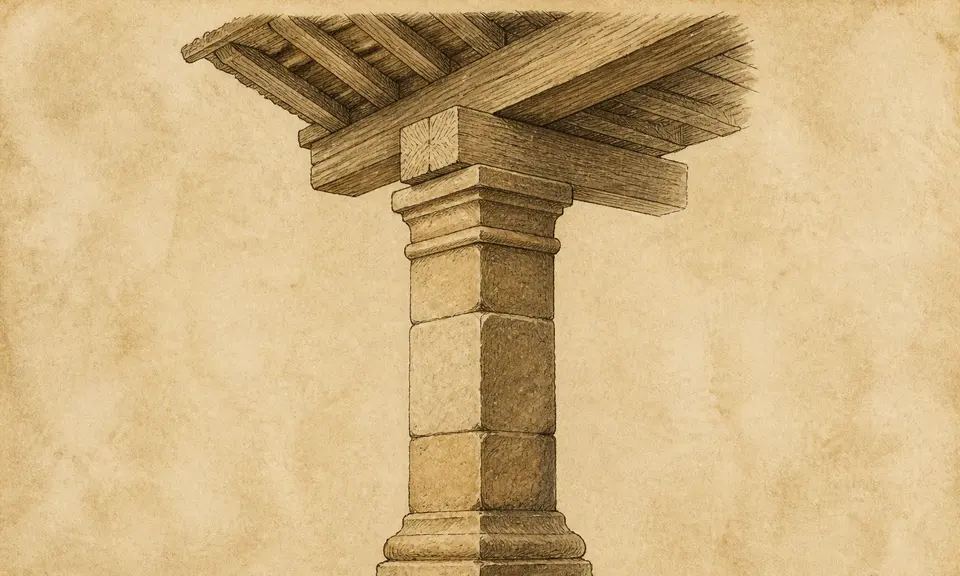
The two books agree that the pillar of a house stands for a person and disagree about which person. Artemidorus names his and gives the reason: pillars burning with a clean fire and not being destroyed signify that the dreamer's children will pass over to the better, but pillars broken down signify the destruction of sons — for the pillars of houses are the male children. an-Nabulsi's reading is a single line and puts somebody else there: in a dream it is wealth or a wife. The whole motif is in that difference. Read the Greek way, a broken pillar is a dead son; read the Arabic way, the same pillar is the money or the woman the house stands on — and the Arabic book does not say what happens when it breaks.
This paragraph was generated by a model. It sums up the sources above, comes from none of them and is attributed to no one.
Columns burning with a clean fire and not being destroyed signify that the dreamer's children will pass over to the better; but columns broken down signify the destruction of sons: for the pillars of houses are the male children.
Passage Book II, 10
In a dream it is wealth or a wife.
Section letter dal