Frogs foretell men who are cheats and buffoons, and they are good for those who make their living from a crowd.
Passage Book II, 15
3 readings from 2 sources.
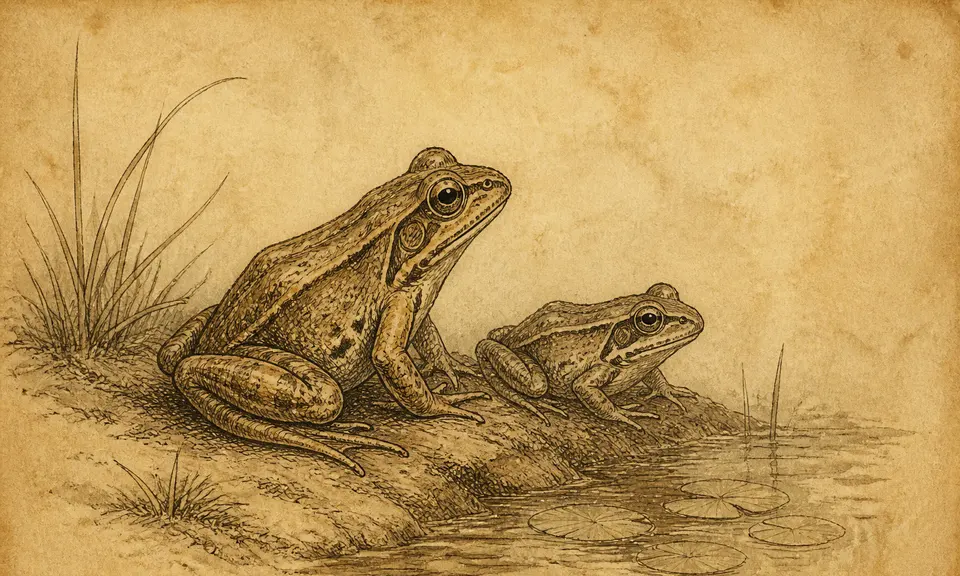
Both books read the frogs as people, and the question is only which people. Artemidorus says frogs foretell men who are cheats and buffoons, and that they are good for those who make their living from a crowd. His case makes the whole marsh a household: a household slave dreamed that he was shaking his fists at frogs, and he was set over his master's house and ruled the people in it — the marsh meant the house, the frogs the people within, and the shaking of fists the giving of orders. Miller reads frogs as company too, and grades it by what the dreamer does with them. To catch frogs denotes carelessness in watching after his health, which may cause no little distress among those of his family; frogs in the grass denote a pleasant and even-tempered friend as confidant and counselor; a bullfrog denotes, for a woman, marriage with a wealthy widower, with children of his to be cared for; frogs in low marshy places foretell trouble that the kindness of others will overcome; eating them signifies fleeting joys and very little gain from associating with some people; and hearing them portends a visit to friends that will in the end prove fruitless of good. The marsh is where the two books separate. In Artemidorus the man who stands over it commands it; in Miller the same low marshy water is where the trouble is, and the dreamer is got out of it by somebody else's kindness.
This paragraph was generated by a model. It sums up the sources above, comes from none of them and is attributed to no one.
Frogs foretell men who are cheats and buffoons, and they are good for those who make their living from a crowd.
Passage Book II, 15
I know a household slave who dreamed that he was shaking his fists at frogs. He was set over his master's house and ruled the people in it: for the marsh meant the house, the frogs the people within, and the shaking of fists the giving of orders.
Passage Book II, 15
To dream of catching frogs, denotes carelessness in watching after your health, which may cause no little distress among those of your family. To see frogs in the grass, denotes that you will have a pleasant and even-tempered friend as your confidant and counselor. To see a bullfrog, denotes, for a woman, marriage with a wealthy widower, but there will be children with him to be cared for. To see frogs in low marshy places, foretells trouble, but you will overcome it by the kindness of others. To dream of eating frogs, signifies fleeting joys and very little gain from associating with some people. To hear frogs, portends that you will go on a visit to friends, but it will in the end prove fruitless of good.