But for the remaining undertakings they signify those who stand by a man, and defend him, and lend a hand in his needs.
Passage Book II, 24
3 readings from 3 sources.
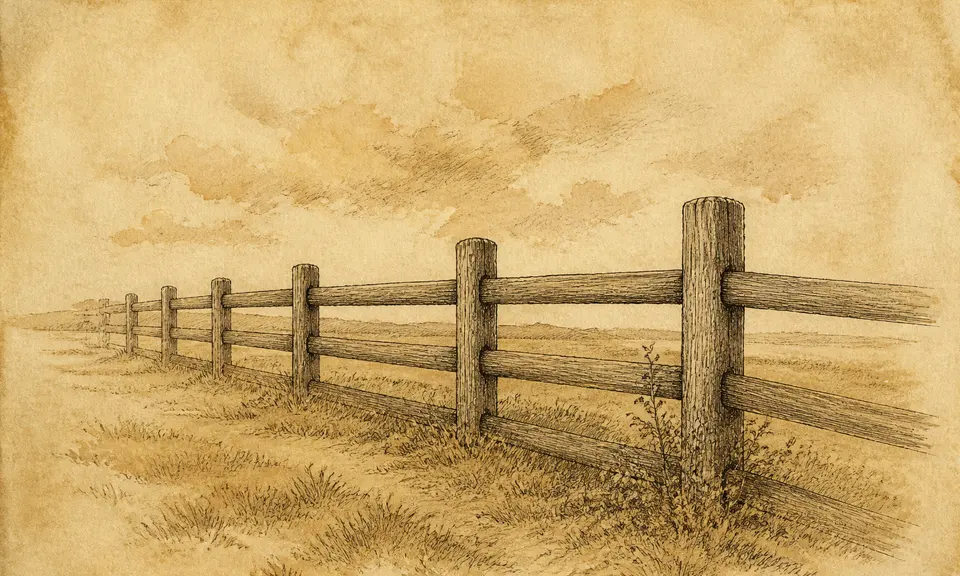
Miller's fence is an obstacle and every reading is a verb done to it: climbing to the top is success crowning the dreamer's efforts, falling off is a project he is not equal to, climbing through it is reaching his desires by means not altogether legitimate, and throwing it down and walking into the other side is enterprise and energy overcoming the stubbornest barrier. Building one is economy and industry laying a foundation for future wealth, and even the livestock counts — stock jumping into the dreamer's enclosure is aid from unexpected sources, stock jumping out of it is loss in trade. Artemidorus does not read the fence as a barrier at all but as the people round a man: for the remaining undertakings, he says, such things signify those who stand by a man, and defend him, and lend a hand in his needs. an-Nabulsi never has the dreamer touch the fence. The thing itself is the reading: wealth from a doubtful source and a spurious friend, which makes the fence a boundary that cannot be trusted rather than one to be got over. And then the line that turns up all through the Arabic book, attached to almost any object at all: if his wife is pregnant, it is a boy.
This paragraph was generated by a model. It sums up the sources above, comes from none of them and is attributed to no one.
But for the remaining undertakings they signify those who stand by a man, and defend him, and lend a hand in his needs.
Passage Book II, 24
In a dream it is wealth from a doubtful source and a spurious friend; and if his wife is pregnant, then it is a boy.
Section letter sin
To dream of climbing to the top of a fence, denotes that success will crown your efforts. To fall from a fence, signifies that you will undertake a project for which you are incapable, and you will see your efforts come to naught. To be seated on a fence with others, and have it fall under you, denotes an accident in which some person will be badly injured. To dream that you climb through a fence, signifies that you will use means not altogether legitimate to reach your desires. To throw the fence down and walk into the other side, indicates that you will, by enterprise and energy, overcome the stubbornest barriers between you and success. To see stock jumping a fence, if into your enclosure, you will receive aid from unexpected sources; if out of your lot, loss in trade and other affairs may follow. To dream of building a fence, denotes that you are, by economy and industry, laying a foundation for future wealth. For a young woman, this dream denotes success in love affairs; or the reverse, if she dreams of the fence falling, or that she falls from it.