auspicious
Your body entering into the earth: a hundred things auspicious.
Section Land, mountains, stones and trees
3 readings from 2 sources.
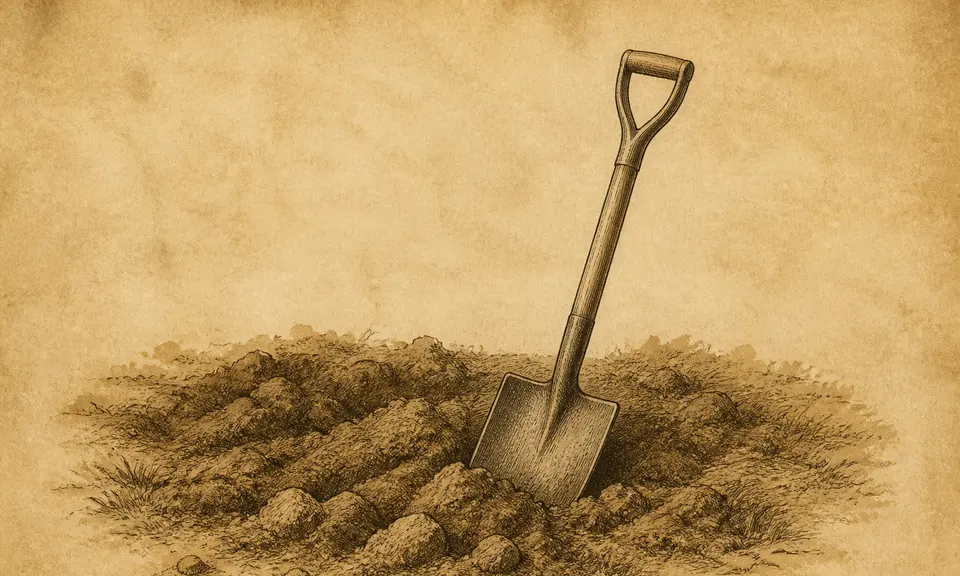
Two readings of the Duke of Zhou stand against a long Arabic one, and they meet it at exactly two points. The body entering into the earth is, for the Duke of Zhou, a hundred things auspicious; the earth that splits and swallows the dreamer is, for an-Nabulsi, shame and the failing of means, and perhaps travel and imprisonment. The second point is the hands, and there the two books agree without ever having met: taking up earth with your own hands is disgrace in the Chinese reading, and in the Arabic one the man who carries the earth and finds no weight in it has wronged another in his land and is collared with it upon his neck, or else becomes a tyrant who stirs up the earth and carries it upon his shoulder. Everything else in an-Nabulsi is the long work of telling one piece of ground from another, because every land is according to itself and its substance. The ground of the house is what is spread upon it of matting and carpet, or whoever undertakes its sweeping; the land of husbandry is its sowing and its fertility and the implement of its ploughing. The unknown land is the mother and the father and the husband and the wife and the partner. Bare land is the marrying of a poor woman or a barren one, because the bare is that which is empty of growth. And the earth is this world while the sky is the hereafter — perhaps two co-wives whom none is able to bring together save God the Most High.
This paragraph was generated by a model. It sums up the sources above, comes from none of them and is attributed to no one.
auspicious
Your body entering into the earth: a hundred things auspicious.
Section Land, mountains, stones and trees
Taking up earth with your own hands: you suffer disgrace.
Section Land, mountains, stones and trees
It in a dream has an interpretation, and every land is according to itself and its substance. So the land of the Gathering: the seeing of it in a dream points to the keeping of secrets, and to riches after poverty, and to safety from fear, and to the truthfulness of a promise; and perhaps it points to the noble wife, the virgin, the beautiful, or to the great office of little fortune, and to guidance and to repentance. And likewise, if he saw the back of the whale or of the bull that carries the earth, and it did not change and did not shift, it points to the king's deposing himself or deposing his deputy, while the conditions of the world do not change. And the ground of the house is a building up, pointing to what is spread upon it of matting and carpet and other than that, or to whoever undertakes its sweeping and its upkeep, or to whoever gathers upon it of family and kin, according to what is seen in it of soundness or corruption, upon whomever it points to. As for the land of husbandry, it points to its sowing and its raising and its fertility and its freshness and the implement of its ploughing and its threshing and its farmer; so whatever comes about in it of customary growth or sweet scent or blossom or bloom or watering or smoothness or height or roughness goes back to the one we have mentioned. And as for the ground of the quarter, it points to journeys for the merchants and for those who make their living upon it, like the mule hirers and the camel drivers and their likes; so the removal of its obstacles and the pulling up of its stones and the clearness of its roads and their straightness in a dream is a sign of profit for the traveller upon it, and of the easing of their affairs, and of the passing away of their care, and of the swiftness of their stages. And as for the known land, it points to the one who holds authority over it by lease or inheritance or digging; so whatever comes about in it of length or shortness beyond the appointed bound goes back upon the one who holds authority over it, of those we have mentioned. And as for the unknown land, it points to the mother and the father and the husband and the wife and the partner and the trustee and the heiress, and to what he owns of a house or a riding beast or a slave woman, and to what he sits upon of a bed or other than it. And the land points to the houses of fornicators and of the dissolute, and to diversion and play. And the land is a tale-bearing woman who keeps no secret. And the land points to disputation or to knowledge or to eloquence. And it points to this world, and the sky to the hereafter. And perhaps the earth and the sky point to the two co-wives whom none is able to bring together save God the Most High. And if he saw that the earth split open, it points to exchange and to the showing forth of forbidden and reprehensible things; and perhaps its splitting points to its goodness in growth and blessing. And the lengthening of the land and its stretching beyond its wont is a sign of the release of the imprisoned and of the delivery of the pregnant woman; and its extending beyond its wonts is provision. And if he saw that he owned a bare land, he marries a poor woman or a barren one, because the bare is that which is empty of growth. And perhaps the land points to a possession in the keeping of the sultan, or to death and life and provision, and to whoever works upon it; that is, that he owned a land: he marries if he was unwed, and is granted a child, or he enters into partnership with a partner, or he entrusts a person with his wealth and his secret, or he inherits an inheritance, or he rents a house or buys it, or buys a riding beast or a slave woman, or buys pressed juice, each person according to his measure and to what befits him; and if kingship befits him, then kingship. And if the seer was sick, he recovers from his sickness and rises to his land and his provision. And if the land was spacious and fair of aspect, his work upon it is sound; and if there were upon it carcasses or decayed bones or filth, then what he worked upon it was a thing. And if the land spoke to him, or he heard from it speech that he does not understand, it points to hardship and to alarming rumours and to the tearing away of veils. And if he saw that the earth quaked with him, perhaps that points to the pregnant woman's laying down her child. And if he saw the earth swallow up those upon it, it points to straying and conceit and heedlessness of obedience to God the Most High. And if the earth was rolled up from beneath him, it points to the finishing of his work, or to the divorce of his wife, or to the going of his office. And if the land turned into pits or iron or stone, perhaps his wife's conceiving becomes hard, or he moves to a craft other than his craft; and perhaps he is granted wealth from his earning, or he finds a mine. And if he saw a land in a dream, his worth rises among people, or he devotes himself to discipline and the breaking of the soul. And if he carried the earth and finds no weight in it, it points to his wronging another in his land, and to his being collared with it upon his neck, or to his becoming a tyrant who stirs up the earth and carries it upon his shoulder and is helped to that; and perhaps he becomes a townsman or a maker of leather mats. And if he ate the earth, it points to his obtaining from his striving upon it its benefit, or that a benefit came back to him from his sowing upon it; and perhaps he sells what he sits upon or rides or treads, and eats its price. And if he saw that the earth split and swallowed him, it points to shame and to the failing of means; and perhaps he travels and is imprisoned, or he becomes beholden. And whoever saw that he is in a wide, level land that he does not know, and it resembles the desert, he travels a journey in haste.
Section letter alif