And if the cloak is white, the man who saw it will marry a free woman.
Passage Book I, 54
4 readings from 2 sources.
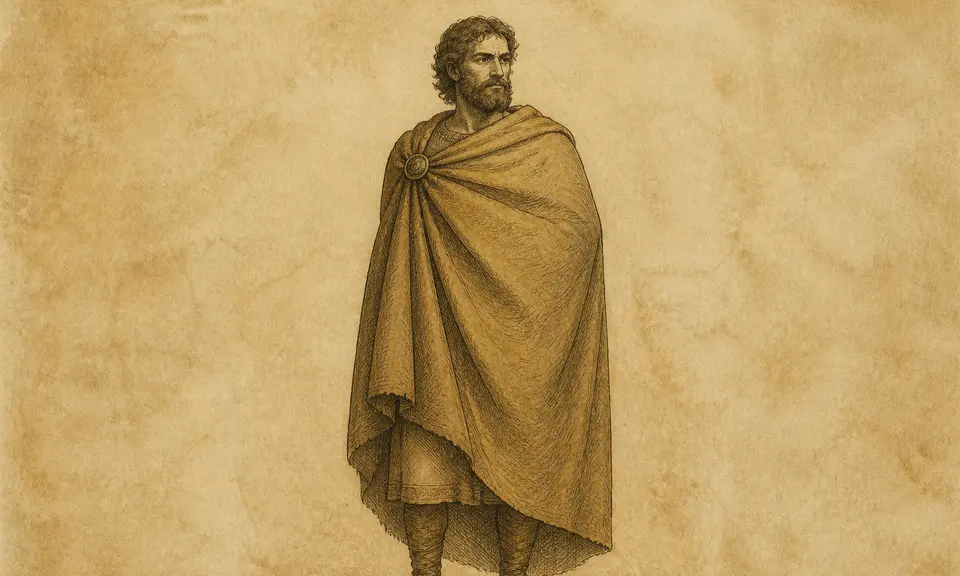
Both books read the cloak as what a man is to other people, and both weigh the white. Artemidorus turns it into a marriage: a white cloak means the man who saw it will marry a free woman, and a purple one a woman of better birth than himself. The Arabic book has a short reading saying only that a cloak is clothing and better in winter than in summer — and a longer one that makes it the standing of the man and his honour, when it is new and thick and white. From there it goes further than Artemidorus does: a thin cloak is thinness in the religion of its owner, because the mantle is the man's religion and his hopes; one who wears it in winter is a man who adorns himself and boasts, and is poor. It ends with two readings set against each other: it is said that the mantle is a base woman, so that a man who sees her has a matter he has stripped himself bare for, of little profit — and to lose a mantle or a worn shoulder cloak means he is safe from poverty and vies in glory with people.
This paragraph was generated by a model. It sums up the sources above, comes from none of them and is attributed to no one.
And if the cloak is white, the man who saw it will marry a free woman.
Passage Book I, 54
But if it is purple, a woman of better birth than himself.
Passage Book I, 54
It is in a dream a clothing, and in the winter it is better than in the summer.
Section letter kaf
It is in a dream the standing of the man and his honour, if it was new and thick and white. And if it was thin, then it is thinness in the religion of its owner, because the mantle is the man's religion and his hopes. And if he was wearing it in winter, then he is one who adorns himself and boasts, and he is poor. And it is said that the mantle is a base woman; so if a man saw her, then it is a matter he has stripped himself bare for, of little profit. And if he saw that a mantle or a worn shoulder cloak was lost to him, then he is safe from poverty and vies in glory with people.
Section letter ra