Church

2 readings from 2 sources.

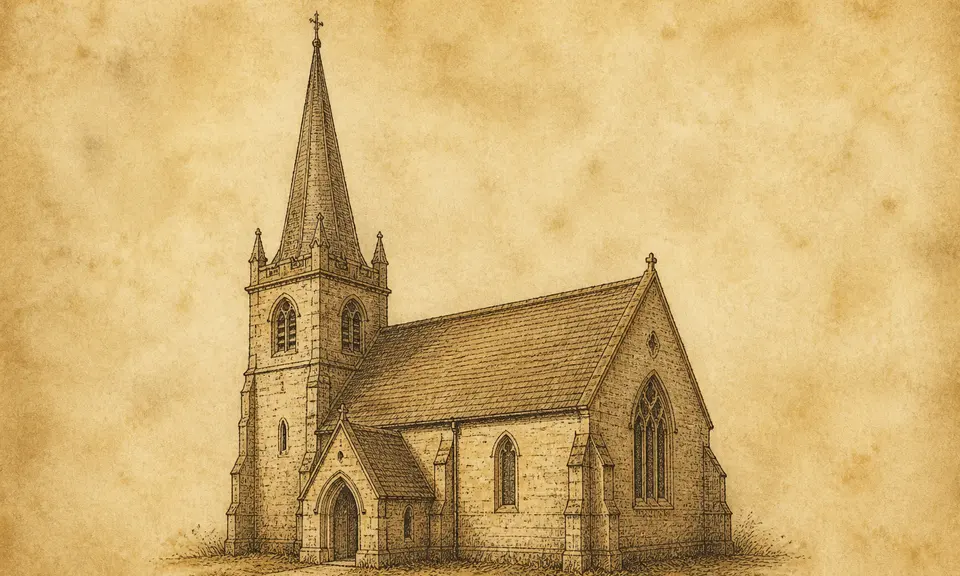
The image was generated by a model. It is not a period engraving and comes from none of the sources.

Here it matters whose building is being looked at. Miller reads a church he belongs to, and reads it for mood: to see one in the distance denotes disappointment in pleasures long anticipated, to enter one wrapt in gloom means the dreamer will take part in a funeral, and dull prospects of better times are portended. an-Nabulsi reads a building that belongs to other people, and he says so in the first line: for its own people the church points to knowledge and work and asceticism and the fear of God and weeping. For the dreamer it may point to care and vexation and lying and calumny and slander, to innovation, to the house of injustice and of amusement and of play, to fellowship over wine and impurities, to the wife and the slave woman, and to the ruler who judges with injustice; and perhaps it is the dwelling of the devils, like the dunghill and the bath house. What the dreamer does inside decides the rest. An unmarried man who entered married or was granted a child, or else went astray after his guidance — especially if he prostrated himself to the images or kissed them or shared with them in the offering or had a girdle around his waist; while the man who stood within remembering God and rejecting their deeds commands what is right and forbids what is wrong, each according to his ability and his rank. Even the architecture is read: the newness of the church and its height is a proof of weakness in religion and of the forsaking of the Muslims.

This paragraph was generated by a model. It sums up the sources above, comes from none of them and is attributed to no one.

Arabic dream book

It is, for its own people, in a dream a pointer to knowledge and to work and to asceticism and to the fear of God and to weeping. And perhaps it points to care and vexation and lying and calumny and slander. And perhaps the church points to innovation and to the house of injustice and of amusement and of gathering and of play, and to fellowship over wine and impurities, and to the wife and to the slave woman; and it points to the ruler who judges with injustice. So whoever entered a church in a dream, being among the unmarried, he married or was granted a child, or he went astray after his guidance, and especially if he prostrated himself to the images or kissed them or shared with them in the offering or had a girdle around his waist. And if he was within it remembering God the Most High and rejecting their deeds, then he commands what is right and forbids what is wrong, every person according to his ability and his rank. And perhaps the church points to the dwelling of the devils, like the dunghill and the bath house. And the newness of the church and its height is a proof of weakness in religion and of the forsaking of the Muslims.

Section letter kaf

The Perfuming of Mankind in the Interpretation of Dreams

Abd al-Ghani al-Nabulsi

before 1731; first printed Cairo 1858 · Arab-Islamic

carries the ancient tradition after Artemidorus

About this source

An Arabic dream book by the Damascene scholar al-Nabulsi, an alphabetical dictionary of two and a half thousand headwords. It draws on the ancient tradition directly: Artemidorus was translated into Arabic by Hunayn ibn Ishaq in the ninth century. The readings here almost always address the dreamer’s standing, property and faith rather than their feelings.

Rights: public domain

Where the text is from: https://shamela.ws/book/1217

Miller

To dream of seeing a church in the distance, denotes disappointment in pleasures long anticipated. To enter one wrapt in gloom, you will participate in a funeral. Dull prospects of better times are portended.

Ten Thousand Dreams Interpreted; Or, What's in a Dream

Gustavus Hindman Miller

1901 · American Victorian

carries fragments of the ancient tradition without its system

About this source

An American dream book, the only one here that knows the telephone, the railroad or the elevator. Doctrinally it is the most degraded: it keeps fragments of the ancient tradition without the system that once held them together.

Rights: public domain

Where the text is from: https://www.gutenberg.org/ebooks/926