A pair of horses differs in nothing from a single riding horse, except for the sick, to whom it foretells death, as does a four-horse chariot, which in other respects signifies the same as the riding horse,
Passage Book I, 56
7 readings from 2 sources.
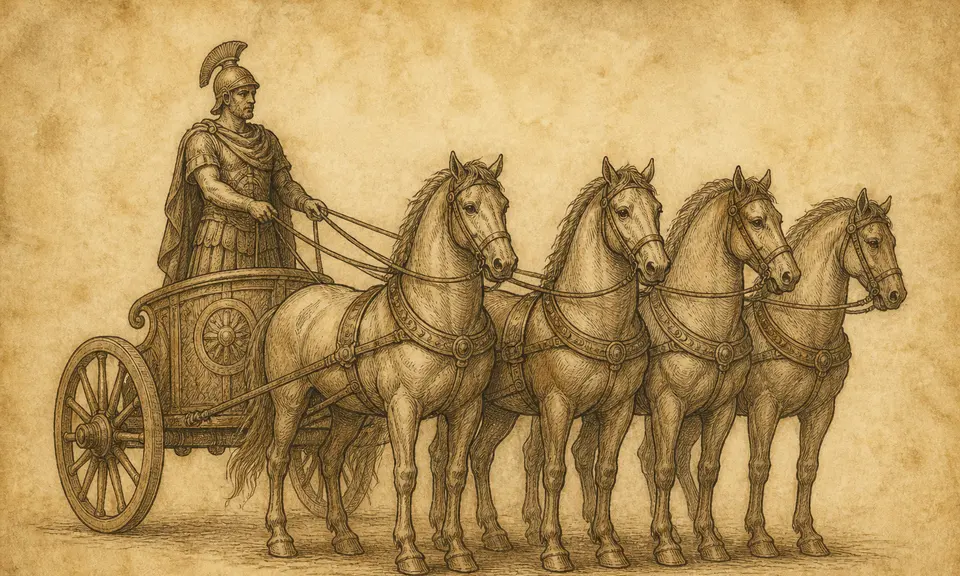
Artemidorus reads the chariot as a horse with a direction added. A pair differs in nothing from a single riding horse, and the same holds for a four-horse team — except for the sick, to whom both foretell death. For athletes in the heavy events it is victory, since they drive in, while to runners it is defeat, for the dream says they are not able to use their own feet. Then the direction decides, and it decides the same way twice: driving into a city is good for both — one will be a victor in the sacred games and the other will not die — and driving out of it is bad for both, since one will be carried out and the other will not win. And to drive through the desert foretells to every dreamer a death that will not be long in coming. Miller makes nothing of the direction and reads only the fall: riding in a chariot means favourable opportunities that will result in good if rightly used, and to fall from one or to see others fall means displacement from high positions.
This paragraph was generated by a model. It sums up the sources above, comes from none of them and is attributed to no one.
A pair of horses differs in nothing from a single riding horse, except for the sick, to whom it foretells death, as does a four-horse chariot, which in other respects signifies the same as the riding horse,
Passage Book I, 56
Of athletes, for those who compete in the heavy events it would be good and bring victory, for they will drive in; but to runners it signifies defeat, for the dream says that they are not able to use their own feet.
Passage Book I, 56
To drive into a city is good for an athlete.
Passage Book I, 56
For the one will be a victor in the sacred games, and the other will not die.
Passage Book I, 56
But to drive out of the city is bad for both, for the one will be carried out, and the other will not win.
Passage Book I, 56
But to drive a chariot through the desert surely foretells to every dreamer a death that will not be long in coming.
Passage Book I, 56
To dream of riding in a chariot, foretells that favorable opportunities will present themselves resulting in your good if rightly used by you. To fall or see others fall from one, denotes displacement from high positions.