It is in a dream a disobedience against God for the one who heard it. The Most High said: {Those are called from a far place}.
Section letter nun
2 readings from 2 sources.
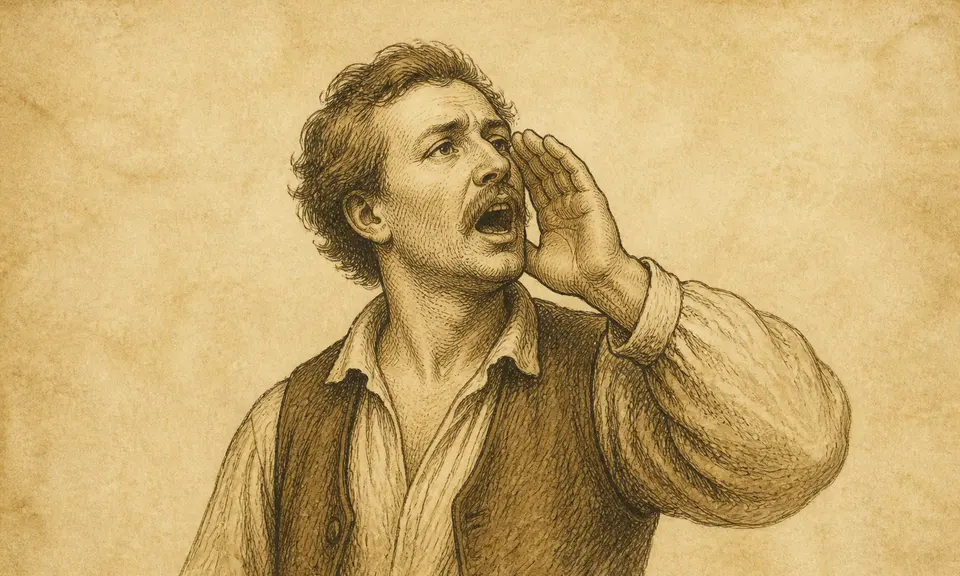
Miller builds a machine and an-Nabulsi passes a sentence. Miller sorts the voices: strange ones mean business falling into a precarious state, where strangers may help or obligations may go unmet; a friend's or relative's voice means the desperate illness of one of them and perhaps death, after which the dreamer may be asked to stand guardian over somebody; lovers who hear the voice of the one they are promised to should heed the warning and make amends for inattention, or suffer separation from misunderstanding; the voice of the dead warns of serious illness. Then he explains it, which is rare for him — the voice is an echo thrown back from the future upon the subjective mind, carrying an ancestor's sound because a certain portion of mind matter stays the same down a line of descent. an-Nabulsi needs one sentence and offers no mechanism at all: a call in a dream is disobedience against God for the one who heard it, on the authority of the verse that those are called from a far place. One book asks who is calling; the other asks what the hearing says about the hearer.
This paragraph was generated by a model. It sums up the sources above, comes from none of them and is attributed to no one.
It is in a dream a disobedience against God for the one who heard it. The Most High said: {Those are called from a far place}.
Section letter nun
To hear your name called in a dream by strange voices, denotes that your business will fall into a precarious state, and that strangers may lend you assistance, or you may fail to meet your obligations. To hear the voice of a friend or relative, denotes the desperate illness of some one of them, and may be death; in the latter case you may be called upon to stand as guardian over some one, in governing whom you should use much discretion. Lovers hearing the voice of their affianced should heed the warning. If they have been negligent in attention they should make amends. Otherwise they may suffer separation from misunderstanding. To hear the voice of the dead may be a warning of your own serious illness or some business worry from bad judgment may ensue. The voice is an echo thrown back from the future on the subjective mind, taking the sound of your ancestor's voice from coming in contact with that part of your ancestor which remains with you. A certain portion of mind matter remains the same in lines of family descent.