The cooks in the market, who chop up meat and sell it, are signs of dangers. They also kill the sick the sooner, since they handle dead bodies and do not leave them whole or sound, but chop them up.
Passage Book III, 56
8 readings from 3 sources.
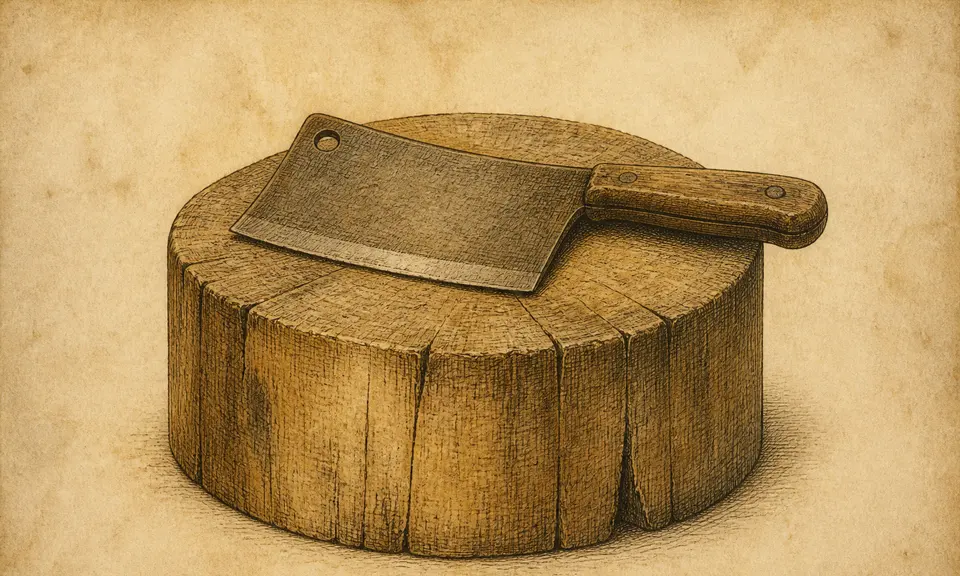
Miller is at the block and reads what he sees there: butchers slaughtering cattle with much blood means long and fatal sickness in the family, a butcher cutting meat means one's character dissected by society — and then, out of nowhere, a warning against writing letters or documents. an-Nabulsi does not look at the meat, because in a dream the butcher is the angel of death, and whoever saw him and took a knife from his hand falls ill, recovers, and attains strength in his life. The man who holds the knife is a tradesman in one book and the one who comes for you in the other. Another Arabic reading takes the butcher by how he looks, which is the one test Miller's block never applies: filthy clothes and a knife in his hand make him a man who destroys men, a clean garment makes his own life long, and a failing condition means his slaughter is forbidden. Artemidorus reads the trade by what the hands do and gets four readings out of the chopping: the cooks in the market who chop up meat and sell it are signs of dangers, and they kill the sick the sooner, since they handle dead bodies and do not leave them whole or sound but chop them up; to the rich they are signs of harm besides, because such a cook distributes the meat to the people; he brings the fear on more stubbornly for those who are afraid; and he looses debts and bonds, because he divides and cuts through — which is the one good word any of the three books gives him.
This paragraph was generated by a model. It sums up the sources above, comes from none of them and is attributed to no one.
The cooks in the market, who chop up meat and sell it, are signs of dangers. They also kill the sick the sooner, since they handle dead bodies and do not leave them whole or sound, but chop them up.
Passage Book III, 56
To the rich they are signs of harm besides the dangers, because such a cook distributes the meat to the people.
Passage Book III, 56
He brings on the fear more stubbornly for those who are afraid.
Passage Book III, 56
He looses debts and bonds, because he divides and cuts through.
Passage Book III, 56
In a dream he is the angel of death: whoever saw him and took a knife from him falls ill and recovers, and attains strength in his life. And whoever sees that he slaughtered his father — then it is dutifulness and the joining of kin, so long as he does not see blood. And if he saw a king slaughter his subjects, then he wrongs them. And if he saw that he slaughtered a beast not for flesh, nor for food that he wanted, nor out of any need of it, but rather meant idle sport by it, then it is the confusion of his affair in what is between him and God Most High. And the sight of the butchers who cut up the flesh and sell it in the markets points to hardship and harm; and in the sick they point to the swiftness of their death; and in the rich they point to a harm that befalls them together with a hardship that is in them; and in those seized by terror they point to the severity of their terror; and in the debtor and the man who is bound, to the paying of the debt and the loosing of the bond. And it is said the butcher is the shedder of blood, and it is said he is the man of the sword. And the sight of the butcher for the care-laden and for the prisoner is a sign of good and of relief, because he parts the limbs and frees one of them from another. And whoever killed a butcher was saved from illness. And the butcher in a dream points to the master of the ship, and to the divider of money among the heirs and the orphans.
Section letter qaf
He is in a dream a man who destroys men, if his clothes were filthy and there was a knife in his hand; and if he was clean of garment, his life in this world grows long. And the butcher, when his state is good in a dream, points to a good end for him, or to the undoing of his living; and if he was in a failing condition, that points to his slaughter being forbidden. And the butcher, when he is a man, is the angel of death, and he is hardly ever seen in a place without leaving a trace there at once.
Section letter jim
In a dream he is an unjust man; and the mention of him has already been given in the letter jim under the butcher.
Section letter dhal
To see them slaughtering cattle and much blood, you may expect long and fatal sickness in your family. To see a butcher cutting meat, your character will be dissected by society to your detriment. Beware of writing letters or documents.