If anything happens to the shoulders, they mean the opposite of what has been said, and often also the death or the sickness of a brother: for the shoulders are brothers of one another.
Passage Book I, 40
6 readings from 3 sources.
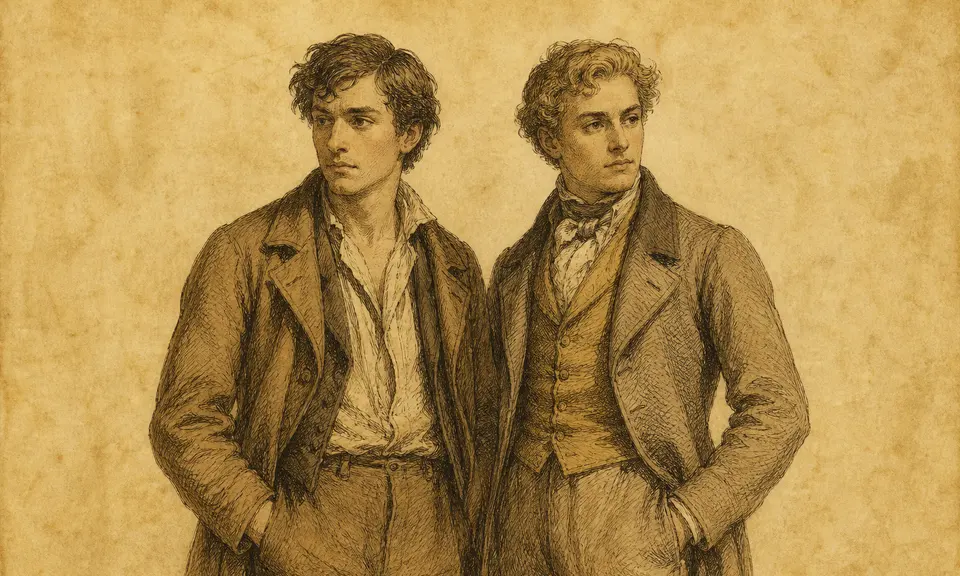
Miller reads the brothers by their condition and makes the dream a message about the family: brothers full of energy mean cause to rejoice at one's own or their good fortune, while brothers poor, in distress or begging mean a deathbed soon or a dire loss. Artemidorus reads the brother as a rival for one's own share and says so outright: brothers have the same meaning as enemies with respect to outcomes, for they come not for a man's benefit but for his harm, just as enemies do, since what he was going to have alone, this he will have not alone but by half or by a third part. From that follows the reading he backs with two cases, that brothers dying mean not only the destruction of enemies but also release from a loss that is expected — Timocrates dreamt that he was burying one of his brothers, who had died, and not long after saw one of his enemies dead, and Diocles the grammarian, who feared losing money through someone's spite, dreamt that his brother had died and came off without loss. He reads the brother into the body as well, since if anything happens to the shoulders they often mean the death or the sickness of a brother, for the shoulders are brothers of one another. an-Nabulsi reads them as a legal relation: seeing a brother, and the same holds of anyone with a share in the inheritance, points to partnership in money and to the people who help.
This paragraph was generated by a model. It sums up the sources above, comes from none of them and is attributed to no one.
If anything happens to the shoulders, they mean the opposite of what has been said, and often also the death or the sickness of a brother: for the shoulders are brothers of one another.
Passage Book I, 40
Further, brothers too have the same meaning as enemies with respect to outcomes; for they come not for a man’s benefit but for his harm, just as enemies do, since what he was going to have alone, this he will have not alone but by half or by a third part …
Passage Book IV
Timocrates dreamt that he was burying one of his brothers, who had died. Not long after, he saw one of his enemies dead.
Passage Book IV
Brothers dying mean not only the destruction of enemies but also release from a loss that is expected. For instance, Diocles the grammarian, who was afraid of losing money through someone's spite, dreamt that his brother had died. He came off without loss.
Passage Book IV
When he saw him in his dream — and the same holds of the grandfather, the paternal uncle, the maternal uncle and anyone who has a share in the inheritance — that points to a partnership in money and to those who help; and one of them may stand for another in the same way.
Section letter alif
To see your brothers, while dreaming, full of energy, you will have cause to rejoice at your own, or their good fortune; but if they are poor and in distress, or begging for assistance, you will be called to a deathbed soon, or some dire loss will overwhelm you or them.