In a dream it is a vizier, because the fire is a ruler. Seeing the bellows points to the reviving of a name, to the healing of the sick, to provision flowing, and to a woman conceiving and bearing a male child.
Section letter mim
3 readings from 2 sources.
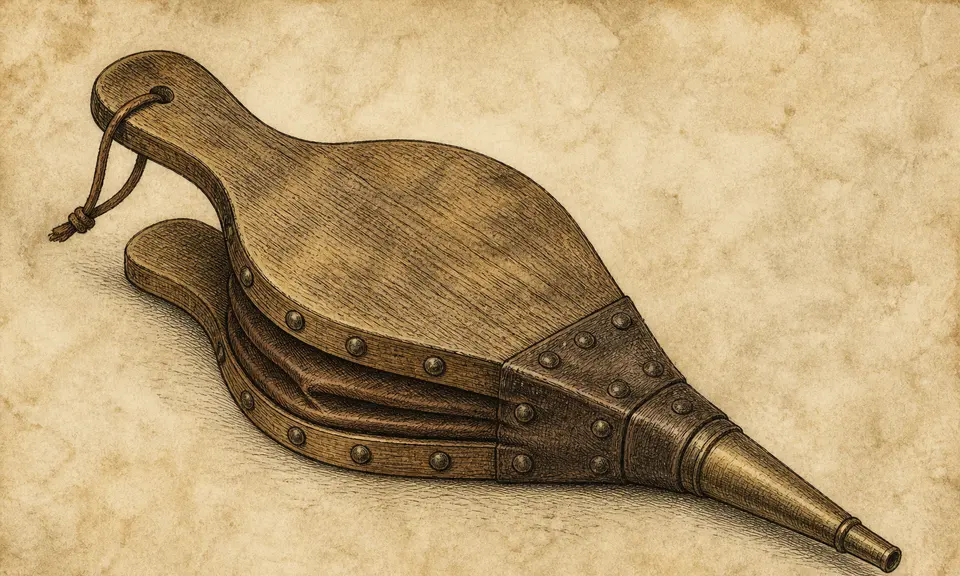
Miller reads the bellows as effort: working one means a struggle and a final triumph over poverty by energy and perseverance, seeing one means distant friends longing for the dreamer, hearing one means occult knowledge obtained by powerful means, and one fallen into disuse means energies wasted under misguiding impulses. an-Nabulsi reads the fire next to it and decides the rank from that: the bellows is a vizier, because the fire is a ruler. Then he lists what it brings — a name revived, a sick man healed, provision flowing, and a woman who conceives and bears a son. In both books it is the thing that makes something else burn hotter. Another Arabic reading takes the blacksmiths' forge and reads it by what it is made of and what is in it: a forge of wood lowers your rank and costs a king his kingdom, a forge with fire in it is needs met and provision, a forge without fire is cares. The goldsmith's forge is sincerity in worship and the glassmaker's is deceit. And then the reading the other book has no room for — the woman who conceives often and miscarries quickly, the man quick to feeling and quick to turn away, the prison and the place of punishment.
This paragraph was generated by a model. It sums up the sources above, comes from none of them and is attributed to no one.
In a dream it is a vizier, because the fire is a ruler. Seeing the bellows points to the reviving of a name, to the healing of the sick, to provision flowing, and to a woman conceiving and bearing a male child.
Section letter mim
Whoever sees in a dream that he found the forge to be of wood — his rank is lessened, and his kingdom goes from him if he was a king. And if he came to own a forge, he comes by rule and office, if he is fit for it; and if not, he comes by use and good. And the forge, if there was fire in it, points to needs being met and to provisions; and if there was no fire in it, it points to cares and troubles. And the forge of gold and of silver points to sincerity in holding God one and to giving oneself wholly to worship; and the glassmaker's forge points to cunning and deceit. And perhaps the forge points to the woman who conceives often and miscarries quickly, or to the man of much feeling who is quickly put off. And perhaps it points to the prison and to the place of the watch set aside for punishment. And it points to matters being made easy, if it was the ironsmith's.
Section letter kaf
Working a bellows, denotes a struggle, but a final triumph over poverty and fate by energy and perseverance. To dream of seeing a bellows, distant friends are longing to see you. To hear one, occult knowledge will be obtained by the help of powerful means. One fallen into disuse, portends you have wasted energies under misguiding impulses.