To make proclamation means the same as to blow the trumpet, except that it says the slaves will be set free not by their masters' favour but by crying out themselves.
Passage Book I, 56
3 readings from 3 sources.
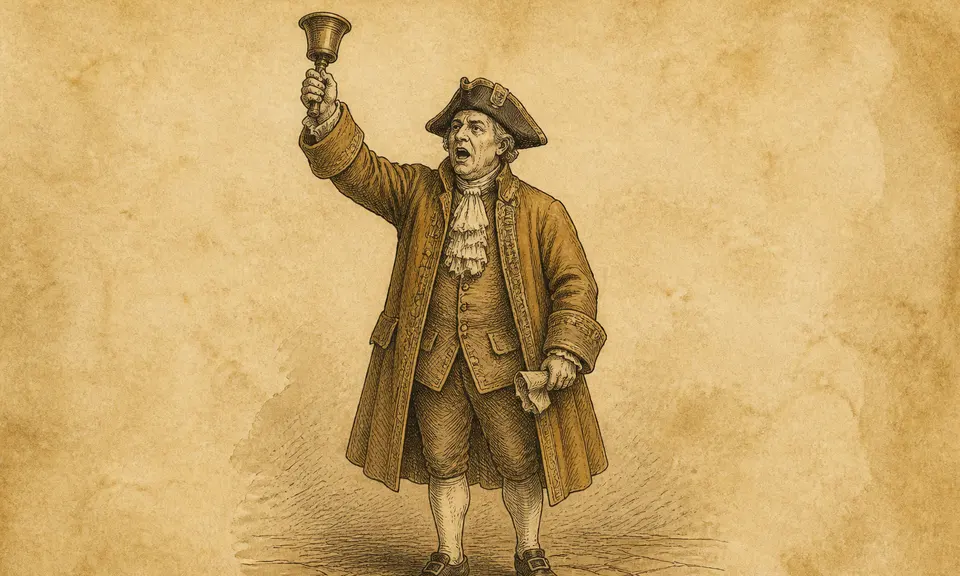
Miller reads the bell-man as fortune catching up: it means fortune is hurrying after the dreamer and that disputes will be settled amicably — unless the man looks sad, and then sorrow or misfortune may follow. Artemidorus sends the reader to the trumpet: making proclamation means the same as blowing it, except that the slaves are set free not by their masters’ favour but by crying out for it themselves. an-Nabulsi reads the crier as distance: he is a sign of travel for whoever hears him, and he quotes the verse about men called to from a far place. The rest is the obvious reading with one limit — he means news spreading, unless what he calls out is unlawful.
This paragraph was generated by a model. It sums up the sources above, comes from none of them and is attributed to no one.
To make proclamation means the same as to blow the trumpet, except that it says the slaves will be set free not by their masters' favour but by crying out themselves.
Passage Book I, 56
He is in a dream a sign of travel for whoever heard him — God, exalted be He, says: “those are called to from a far place”. And seeing the crier points to the spreading of news, unless he is calling out what is not lawful, like calling out pork, or calling out something forbidden.
Section letter mim
Fortune is hurrying after you. Questions of importance will be settled amicably among disputants. To see him looking sad some sorrowful event or misfortune may soon follow.