Beetles, cockchafers and fireflies are of use only to those who do filthy and unseemly work; to the rest they signify harm and want of business, and most of all to sellers of perfume and of spices.
Passage Book II, 22
4 readings from 3 sources.
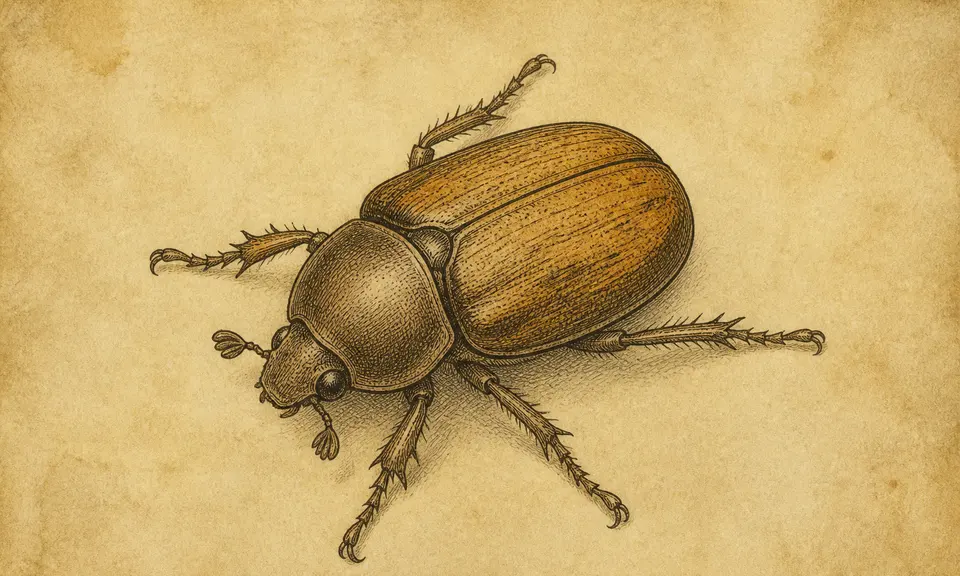
Miller keeps it short and on the body: beetles seen on your person mean poverty and small ills, and killing them is good. Artemidorus allows the thing to one group of men only: beetles, cockchafers and fireflies are of use to those who do filthy and unseemly work, and to the rest they signify harm and want of business, and most of all to sellers of perfume and of spices. an-Nabulsi reads the insect as a person and then sorts it by sex — a hateful, filthy person; the male a servant of evildoers, the female pointing to death, and the beetle altogether a stubborn woman in whom there is no good. Both books agree that the thing is beneath contempt; only the Arabic one takes the trouble to say who it is. Another Arabic reading keeps the contempt and gives the man an occupation: an enemy and an owner of unlawful money, heavy, spiteful and hated, a traveller who carries money from one town to another.
This paragraph was generated by a model. It sums up the sources above, comes from none of them and is attributed to no one.
Beetles, cockchafers and fireflies are of use only to those who do filthy and unseemly work; to the rest they signify harm and want of business, and most of all to sellers of perfume and of spices.
Passage Book II, 22
In a dream it is a hateful, filthy person; the male beetle points to a servant of evildoers and the female points to death, and the beetle is a stubborn woman in whom there is no good. And whoever sees that he came by a beetle comes by a woman of that kind. And whoever sees that the beetle turned into a scorpion — then he is an enemy, and he is thought to be other than the enmity he is in.
Section letter kha
He is in a dream an enemy and an owner of unlawful money; and it is said that he is a heavy, spiteful, hateful man, a traveller who carries money from one town to another.
Section letter jim
To dream of seeing them on your person, denotes poverty and small ills. To kill them is good.