Of the vegetables called white, the turnip, the navew and the gourd mean empty hopes, for they are all of them bulk without nourishment.
Passage Book I, 67
5 readings from 3 sources.
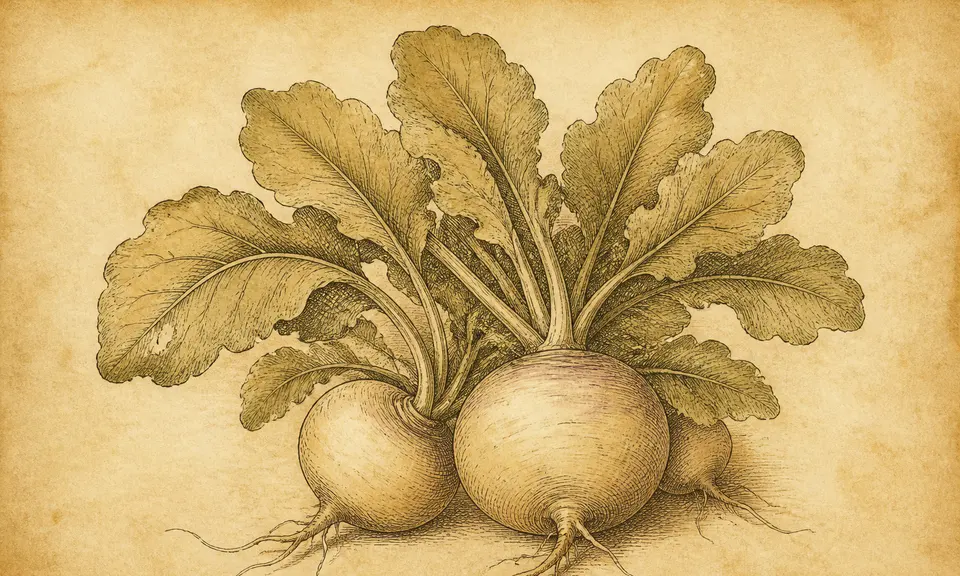
Miller sorts the turnip by what is being done to it: turnips growing mean brightening prospects, eating them ill health, pulling them up opportunities improved, eating the greens bitter disappointment, the seed future advancement — and a young woman who sows it inherits good property and wins a handsome husband. Artemidorus counts the turnip among the white vegetables and allows none of them anything: the turnip, the navew and the gourd mean empty hopes, for they are all of them bulk without nourishment — and to the sick and to those on a journey they mean that cuttings and incisions by iron will be made, because such things are chopped up. an-Nabulsi gives it three clauses and the last one carries the reading: it points to a village woman; and if it is growing, they are children who die; and the turnip is fellowship, because the word for it sounds like the word for being close.
This paragraph was generated by a model. It sums up the sources above, comes from none of them and is attributed to no one.
Of the vegetables called white, the turnip, the navew and the gourd mean empty hopes, for they are all of them bulk without nourishment.
Passage Book I, 67
But to the sick and to those on a journey they mean that cuttings and incisions by iron will be made, because such things are chopped up.
Passage Book I, 67
In a dream it points to a village woman; and if it is growing, they are children who die. And the turnip is fellowship.
Section letter lam
It is in a dream a village woman, hardy, given to meddling; and it is said that it is care and grief; and if it was sprouting, they are children who bring sorrow.
Section letter shin
To see turnips growing, denotes that your prospects will brighten, and that you will be much elated over your success. To eat them is a sign of ill health. To pull them up, denotes that you will improve your opportunities and your fortune thereby. To eat turnip greens, is a sign of bitter disappointment. Turnip seed is a sign of future advancement. For a young woman to sow turnip seed, foretells that she will inherit good property, and win a handsome husband.