Traitor

2 readings from 2 sources.

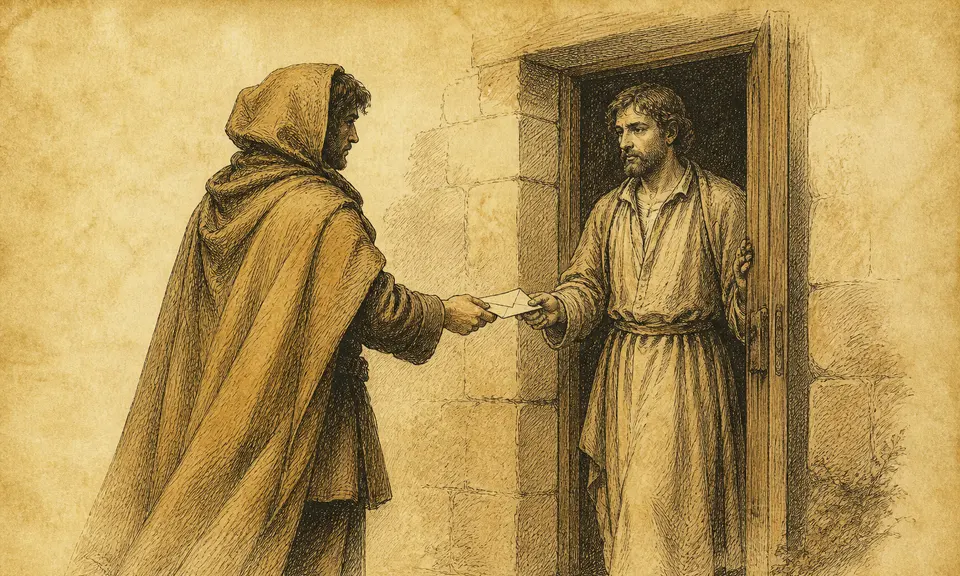
The image was generated by a model. It is not a period engraving and comes from none of the sources.

Miller reads the traitor from outside and from inside: seeing one means enemies working to despoil the dreamer, and being called one, or imagining oneself one, means poor prospects of pleasure. an-Nabulsi reads betrayal as a loss of two different kinds in two short clauses — for men of property it is a sign of their coming poverty, and betrayal itself points to fornication. The English book has a man who cannot be trusted; the Arabic has the two things such a man will lose, his money and his marriage.

This paragraph was generated by a model. It sums up the sources above, comes from none of them and is attributed to no one.

Arabic dream book

For the men of property, in a dream, it is a sign of their poverty; and betrayal points to fornication.

Section letter kha

The Perfuming of Mankind in the Interpretation of Dreams

Abd al-Ghani al-Nabulsi

before 1731; first printed Cairo 1858 · Arab-Islamic

carries the ancient tradition after Artemidorus

About this source

An Arabic dream book by the Damascene scholar al-Nabulsi, an alphabetical dictionary of two and a half thousand headwords. It draws on the ancient tradition directly: Artemidorus was translated into Arabic by Hunayn ibn Ishaq in the ninth century. The readings here almost always address the dreamer’s standing, property and faith rather than their feelings.

Rights: public domain

Where the text is from: https://shamela.ws/book/1217

Miller

To see a traitor in your dream, foretells you will have enemies working to despoil you. If some one calls you one, or if you imagine yourself one, there will be unfavorable prospects of pleasure for you.

Ten Thousand Dreams Interpreted; Or, What's in a Dream

Gustavus Hindman Miller

1901 · American Victorian

carries fragments of the ancient tradition without its system

About this source

An American dream book, the only one here that knows the telephone, the railroad or the elevator. Doctrinally it is the most degraded: it keeps fragments of the ancient tradition without the system that once held them together.

Rights: public domain

Where the text is from: https://www.gutenberg.org/ebooks/926