A man dreamed that he could not light his torches from the hearth indoors in his own house, and that he lit them from the heavenly fire. He was crucified, and in this way he was lit by the heavenly fire.
Passage Book V
3 readings from 3 sources.
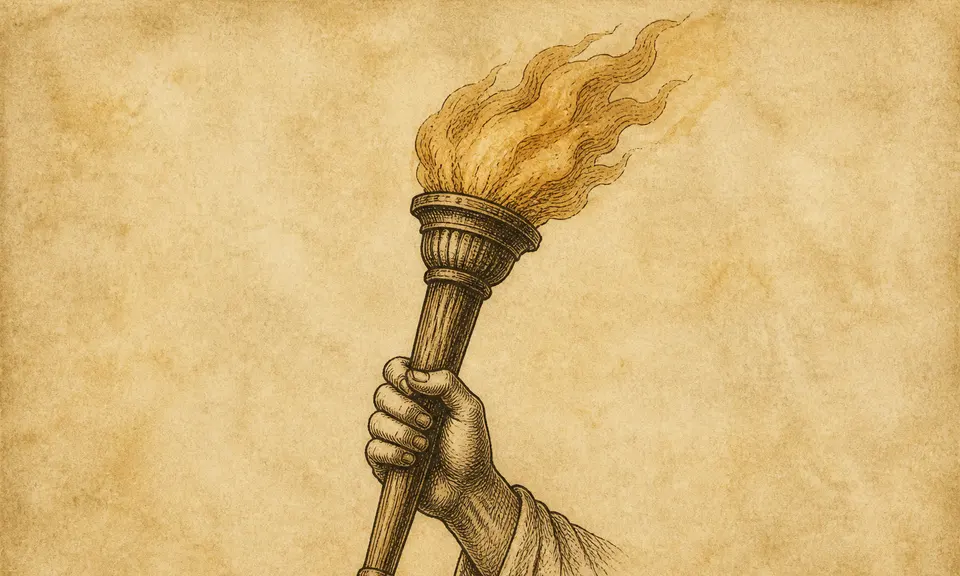
Miller reads the torch by what it does for the dreamer: seeing torches foretells pleasant amusement and favourable business, carrying one means success in love or in intricate affairs, and one going out means failure and distress. Artemidorus has a case instead of a reading, and it ends as badly as a case can: a man dreamed that he could not light his torches at the hearth in his own house and lit them from the heavenly fire instead — he was crucified, and that is how the heavenly fire lit him. an-Nabulsi reads the man who carries it as a guide by whom other people find their way — good, righteousness, knowledge, the man they come back to for his word and his deed — and then adds the detail that makes the reading: his own name is obscure and his portion is small. He lights the road and gets nothing for it.
This paragraph was generated by a model. It sums up the sources above, comes from none of them and is attributed to no one.
A man dreamed that he could not light his torches from the hearth indoors in his own house, and that he lit them from the heavenly fire. He was crucified, and in this way he was lit by the heavenly fire.
Passage Book V
Seeing him in a dream points to a guide by whom people are guided, and points to good and righteousness and knowledge, and to the man people come back to for his word and his deed, though his name is obscure and his portion small.
Section letter mim
To dream of seeing torches, foretells pleasant amusement and favorable business. To carry a torch, denotes success in love making or intricate affairs. For one to go out, denotes failure and distress. See Lantern and Lamp.