To see a man walking on stilts foretells the same thing.
Passage Book I, 76
2 readings from 2 sources.
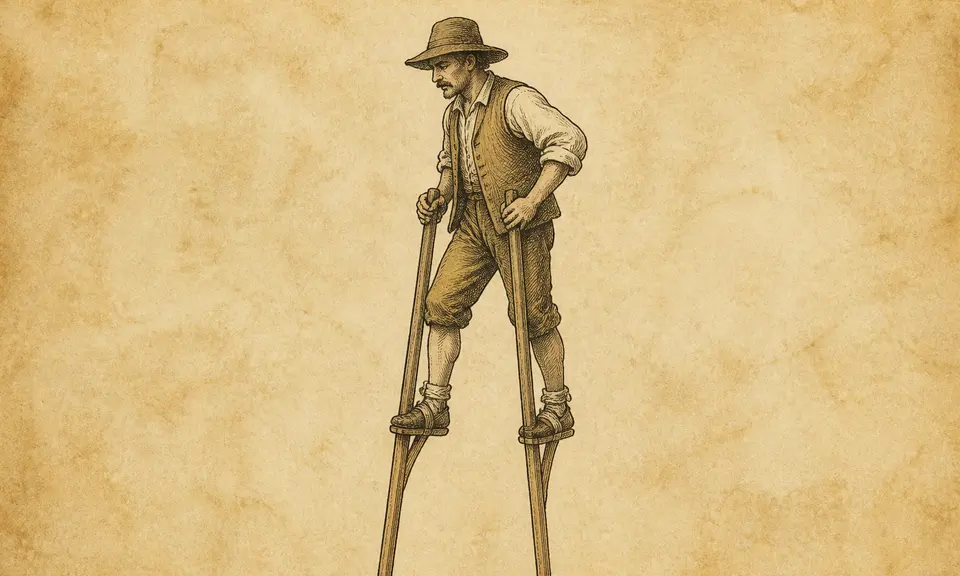
Artemidorus gives stilts one sentence, and on its own it says nothing: to see a man walking on stilts foretells the same thing. The same as what stands in the item before it — the line on hoop-tricks, whirling about among knives and turning somersaults, which are not bad for those who are used to them but foretell to the rest that they will be driven into the uttermost danger. The Greek book here is a cross-reference rather than a reading. Miller has a whole omen and it is about insecurity: to dream of walking on stilts denotes that your fortune is in an insecure condition, and to fall from them or feel them break beneath you means you will be precipitated into embarrassments by trusting your affairs to the care of others. Both books thus make stilts a question of practice and of what holds you up: Artemidorus lets off the man who is used to them, Miller brings down the man standing on something that is not his own.
This paragraph was generated by a model. It sums up the sources above, comes from none of them and is attributed to no one.
To see a man walking on stilts foretells the same thing.
Passage Book I, 76
To dream of walking on stilts, denotes that your fortune is in an insecure condition. To fall from them, or feel them break beneath you, you will be precipitated into embarrassments by trusting your affairs to the care of others.