The shin stands for the wife and the woman one loves.
Passage Book I, 2
2 readings from 2 sources.
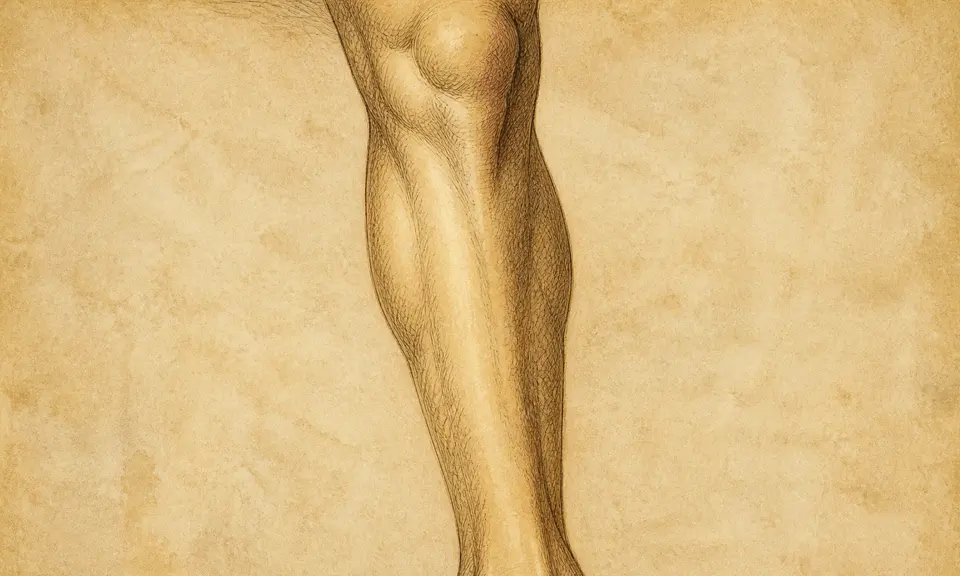
Artemidorus has it in one sentence: the shin stands for the wife and the woman one loves. The Arabic book makes something quite different of it — the man's lifespan and his support in his livelihood — and then reads it through the material and the posture. A shank of iron means a long life, both of glass mean that his appointed term draws near. To raise one shank and stretch out the other so that the two twist about one another means that the term has drawn near, or that a hard and dreadful matter has drawn near to him, or that he is a liar. In two places, though, it meets Artemidorus, and both are about marriage: whoever saw the shank of a woman and then knew her marries her or marries another — and the woman who uncovered her two shanks has a good religion and comes to what is better than what is in her hands.
This paragraph was generated by a model. It sums up the sources above, comes from none of them and is attributed to no one.
The shin stands for the wife and the woman one loves.
Passage Book I, 2
It is in a dream the man's lifespan and his support in his livelihood. So if he saw that his shank is of iron, his life is long; and if he saw the two of them of glass, his appointed term draws near. And if he saw that he raised one shank and stretched out the other, and his two shanks twisted about one another, then his term has drawn near, or a hard and dreadful matter has drawn near to him, or he is a liar. And if he saw the shank of a woman and then knew her, he marries her or marries another. And the woman, if she uncovered her two shanks, her religion is good and she comes to what is better than what is in her hands.
Section letter sin