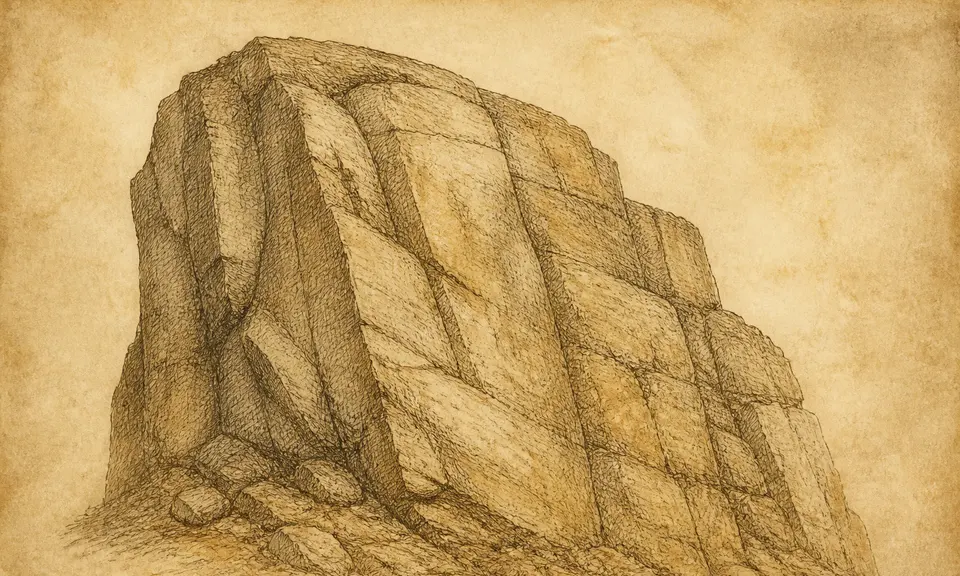
Rocks

2 readings from 2 sources.

The image was generated by a model. It is not a period engraving and comes from none of the sources.

Miller needs two lines: rocks mean reverses, discord and general unhappiness, and climbing a steep rock means immediate struggles and disappointing surroundings. an-Nabulsi reads the rock as what endures: it is the women who endure, and firmness and steadiness and a long life, the doorkeeper and the builder. Then the word turns on him and the reading goes to forgetting, by the verse about taking refuge at the rock and forgetting the fish; and to shamelessness; and to cheap prices when there is much rock in a town. If the rock stands for a post, the post lasts; if for a wife, she is enduring and content.

This paragraph was generated by a model. It sums up the sources above, comes from none of them and is attributed to no one.

Arabic dream book

In a dream it is the women who endure, and it points to firmness and steadiness and a long life; and it points to the doorkeeper and to the builder. Seeing it may point to forgetting, for the word of God: when we took refuge at the rock, I forgot the fish. And it points to shamelessness and dissoluteness; and the rock may point to whoever is named after it, or to a man with something low in his descent. Much rock in a town is cheapness, and the reverse if you reverse it. If the rock points to a post, the post is long and lasting; and if it points to the wife, she is enduring and content. The rock may point to what doorsteps and idols and the like are made of; and the rocks beside the mountains are men whose dwellings are not there, and all of them hard of heart. And whoever sees that he came down upon a rock, or the going of a rock — then its reading is as the reading of the mountains. And whoever sees that he bores into a rock or the like of it is searching into a matter, and he comes by as much of it as his boring reaches into that rock. And when the mountain was a king, the rocks around the mountain and the trees are that king's commanders. And the dead rocks, cut off and thrown on the ground, perhaps pointed to the dead, for their being cut off from the living mountains that give praise; and they point to the people of hardness and heedlessness and ignorance.

Section letter ṣad

The Perfuming of Mankind in the Interpretation of Dreams

Abd al-Ghani al-Nabulsi

before 1731; first printed Cairo 1858 · Arab-Islamic

carries the ancient tradition after Artemidorus

About this source

An Arabic dream book by the Damascene scholar al-Nabulsi, an alphabetical dictionary of two and a half thousand headwords. It draws on the ancient tradition directly: Artemidorus was translated into Arabic by Hunayn ibn Ishaq in the ninth century. The readings here almost always address the dreamer’s standing, property and faith rather than their feelings.

Rights: public domain

Where the text is from: https://shamela.ws/book/1217

Miller

To dream of rocks, denotes that you will meet reverses, and that there will be discord and general unhappiness. To climb a steep rock, foretells immediate struggles and disappointing surroundings. See Stones.

Ten Thousand Dreams Interpreted; Or, What's in a Dream

Gustavus Hindman Miller

1901 · American Victorian

carries fragments of the ancient tradition without its system

About this source

An American dream book, the only one here that knows the telephone, the railroad or the elevator. Doctrinally it is the most degraded: it keeps fragments of the ancient tradition without the system that once held them together.

Rights: public domain

Where the text is from: https://www.gutenberg.org/ebooks/926