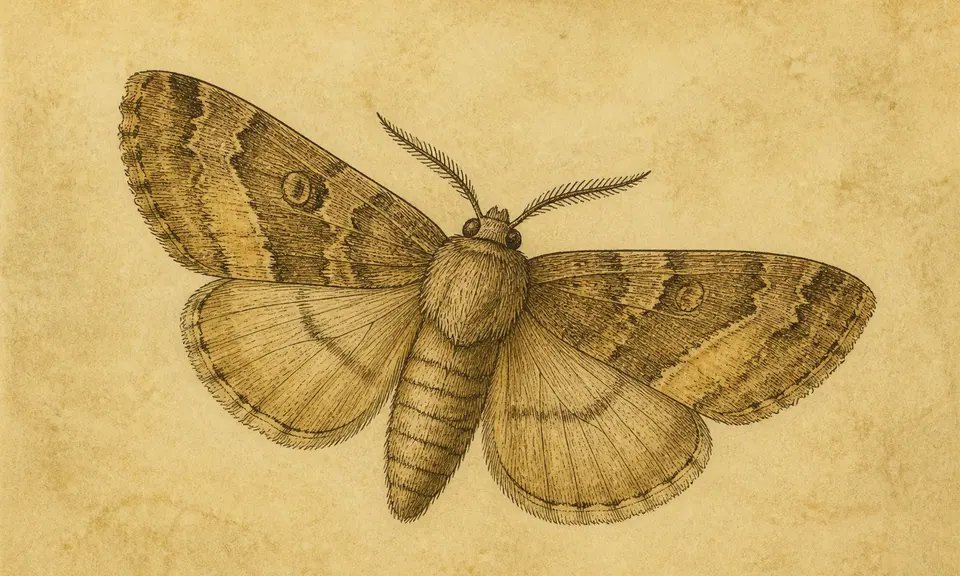
Moth

2 readings from 2 sources.

The image was generated by a model. It is not a period engraving and comes from none of the sources.

Miller leaves the moth at its own size: small worries that drive a man into hasty contracts, and quarrels of a domestic kind. an-Nabulsi does not read the damage at all and reads the insect as a person. The moth is ignorance and inexperience, a love that throws itself into ruin, fire-worshippers and fear — on the verse in which people on the last day are scattered like moths — and a weak, despised enemy of large words; among farmers, idleness and bad company. Silk moths turn it around: good people who have given their goods away, or children whose lives are short. And at the end the moth settles on the loom — on weavers, and on those who weave figures into cloth.

This paragraph was generated by a model. It sums up the sources above, comes from none of them and is attributed to no one.

Arabic dream book

And it is a well-known flying thing. Seeing it in a dream points to ignorance and to having no experience of serving kings and of their statecraft. And perhaps seeing it points to love and to throwing oneself into ruin. And the sight of the moth points to the worshippers of fire, or to fear and dismay, by the word of God: a day when men shall be as scattered moths. And the moth is a weak, despised enemy, big in speech. And the moth, for the farmers, points to idleness and to hardship, and to the company of bad men and of bad women keeping with them. And the silk moths point to the good men who gave out their good and withheld their harm; or they point to children whose lives are short, or to the holders of fine inheritances. And perhaps it points to the nearness of the appointed term and to the end of the work. And it points to the weavers among men and women, and to those who weave figures into the cloth.

Section letter fa

The Perfuming of Mankind in the Interpretation of Dreams

Abd al-Ghani al-Nabulsi

before 1731; first printed Cairo 1858 · Arab-Islamic

carries the ancient tradition after Artemidorus

About this source

An Arabic dream book by the Damascene scholar al-Nabulsi, an alphabetical dictionary of two and a half thousand headwords. It draws on the ancient tradition directly: Artemidorus was translated into Arabic by Hunayn ibn Ishaq in the ninth century. The readings here almost always address the dreamer’s standing, property and faith rather than their feelings.

Rights: public domain

Where the text is from: https://shamela.ws/book/1217

Miller

To see a moth in a dream, small worries will lash you into hurried contracts, which will prove unsatisfactory. Quarrels of a domestic nature are prognosticated.

Ten Thousand Dreams Interpreted; Or, What's in a Dream

Gustavus Hindman Miller

1901 · American Victorian

carries fragments of the ancient tradition without its system

About this source

An American dream book, the only one here that knows the telephone, the railroad or the elevator. Doctrinally it is the most degraded: it keeps fragments of the ancient tradition without the system that once held them together.

Rights: public domain

Where the text is from: https://www.gutenberg.org/ebooks/926