All monstrous things which can in no way come to be, such as a Hippocentaur and Scylla, mean that one’s expectations will prove false, as I said before in the second book.
Passage Book IV
4 readings from 2 sources.
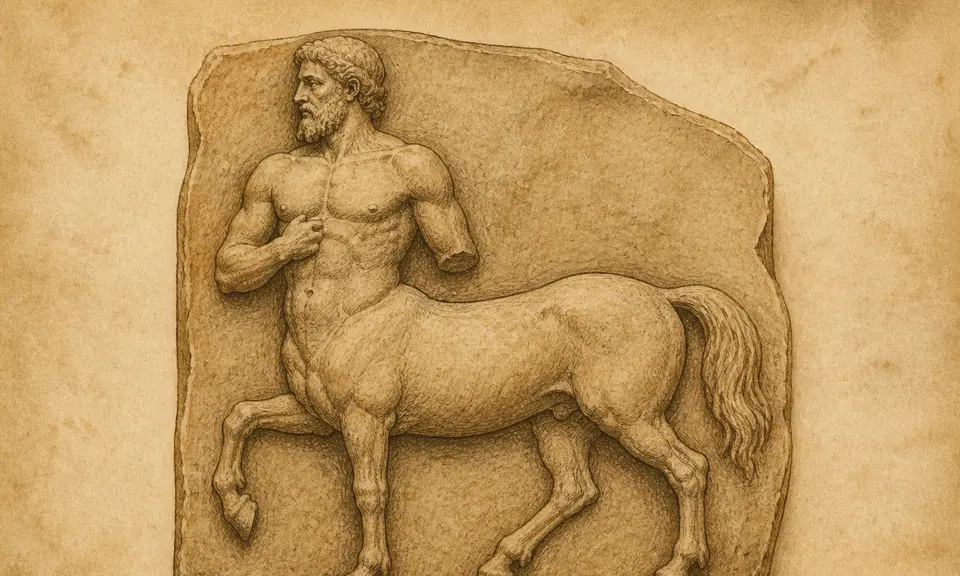
Artemidorus does not read the monster as an animal but as an impossibility. Everything monstrous that can in no way come to be — he names the Hippocentaur and Scylla — means that expectations will prove false. Sometimes, though, it does not bring hopes to completion but instead makes the groundwork of the matter resemble the outlines of the monster. His one case shows both at once: a man who longed for children and whose wife was pregnant dreamed that a Hippocentaur had been born to him. Twin babies were born, because the Hippocentaur has two bodies — and neither child was reared, because a Hippocentaur cannot come to be at all, and if it did come to be it would be impossible to rear. Miller does not ask about impossibility and reads the encounter instead: a monster pursuing you denotes that sorrow and misfortune hold prominent places in your immediate future, and to slay one denotes that you will successfully cope with enemies and rise to eminent positions. For one the monster measures what cannot happen; for the other it is an opponent who can be killed.
This paragraph was generated by a model. It sums up the sources above, comes from none of them and is attributed to no one.
All monstrous things which can in no way come to be, such as a Hippocentaur and Scylla, mean that one’s expectations will prove false, as I said before in the second book.
Passage Book IV
Sometimes, however, it does not bring hopes to completion, but makes the groundwork of the matter resemble the outlines of the monster.
Passage Book IV
A man who longed for children and whose wife was pregnant dreamed that a Hippocentaur had been born to him. Twin babies were born to him, for the Hippocentaur has two bodies. But neither of the children was reared; for a Hippocentaur cannot come to be at all, and if it did come to be, it would be impossible to rear it.
Passage Book IV
To dream of being pursued by a monster, denotes that sorrow and misfortune hold prominent places in your immediate future. To slay a monster, denotes that you will successfully cope with enemies and rise to eminent positions.