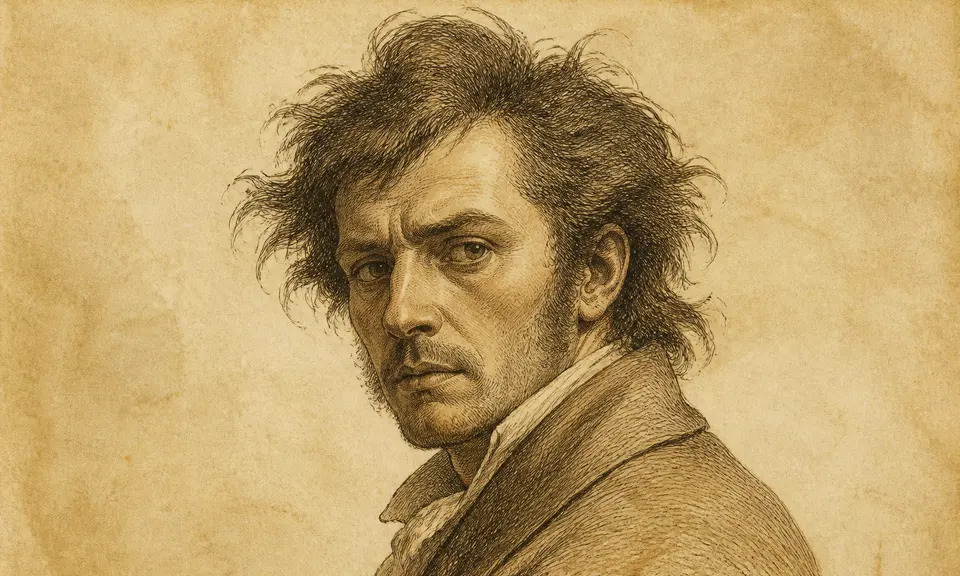
Madness

2 readings from 2 sources.

The image was generated by a model. It is not a period engraving and comes from none of the sources.

Miller reads madness as loss: being mad means trouble ahead and sickness through which property is lost, others suffering it the inconstancy of friends, and for a young woman disappointment in marriage and wealth. an-Nabulsi reads it as riches and honour, if it comes without a cause, and as the world turning towards the dreamer. Then the readings pile up and contradict one another in the way that book allows: taking usury, entering the garden, money in the measure of the madness, clothing from an inheritance, authority, a boy's madness his father's riches, a woman's a fertile year — and at the end, being in love, a painful beating, and righteous deeds.

This paragraph was generated by a model. It sums up the sources above, comes from none of them and is attributed to no one.

Arabic dream book

In a dream it is riches and honour, if it comes without a cause; and it points to the world turning towards him and to joys and gladness through somebody he hopes to be joined to. If in the dream he was thrown about by the touch of something, it is a sign of taking usury. And it is said madness points to his entering the garden. Madness is money that comes to its owner in the measure of the madness in him — unless he spends it in a way he should not, in extravagance and with a bad companion. And it is said it is clothing from an inheritance, and it is said authority for whoever is of the kind. A boy's madness is his father's riches, a woman's madness a fertile year; and madness points to being in love, and to a painful beating, and madness also points to righteous deeds.

Section letter jim

The Perfuming of Mankind in the Interpretation of Dreams

Abd al-Ghani al-Nabulsi

before 1731; first printed Cairo 1858 · Arab-Islamic

carries the ancient tradition after Artemidorus

About this source

An Arabic dream book by the Damascene scholar al-Nabulsi, an alphabetical dictionary of two and a half thousand headwords. It draws on the ancient tradition directly: Artemidorus was translated into Arabic by Hunayn ibn Ishaq in the ninth century. The readings here almost always address the dreamer’s standing, property and faith rather than their feelings.

Rights: public domain

Where the text is from: https://shamela.ws/book/1217

Miller

To dream of being mad, shows trouble ahead for the dreamer. Sickness, by which you will lose property, is threatened. To see others suffering under this malady, denotes inconstancy of friends and gloomy ending of bright expectations. For a young woman to dream of madness, foretells disappointment in marriage and wealth.

Ten Thousand Dreams Interpreted; Or, What's in a Dream

Gustavus Hindman Miller

1901 · American Victorian

carries fragments of the ancient tradition without its system

About this source

An American dream book, the only one here that knows the telephone, the railroad or the elevator. Doctrinally it is the most degraded: it keeps fragments of the ancient tradition without the system that once held them together.

Rights: public domain

Where the text is from: https://www.gutenberg.org/ebooks/926