Locusts and grasshoppers and what are called mastakes foretell to farmers barrenness or the ruin of the crops, for they damage the seed or destroy it.
Passage Book II, 22
4 readings from 3 sources.
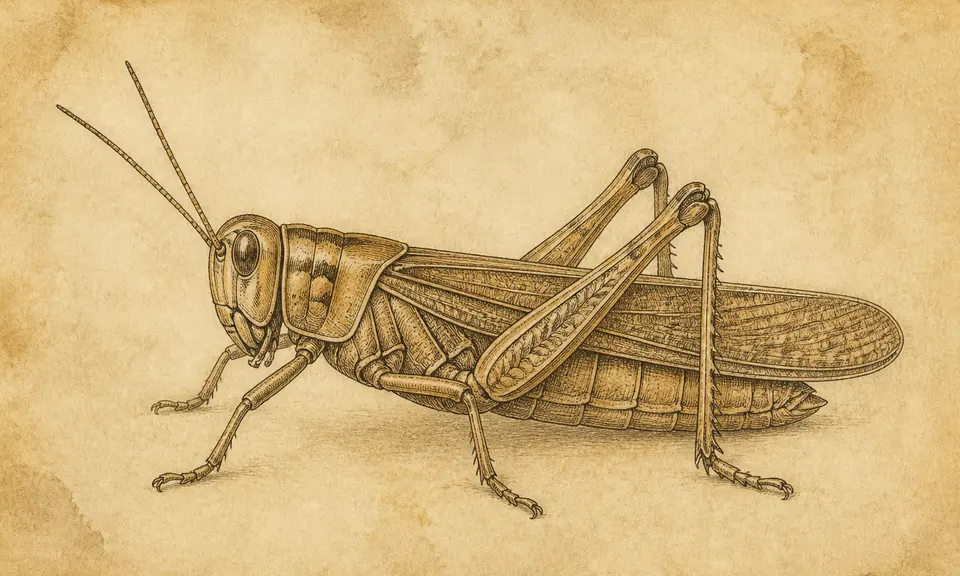
Both books treat the swarm as a disaster, and differ on where it comes from. Miller keeps it in the ledger: discrepancies will be found in the dreamer's business, with worry and suffering to follow, and a woman will give her affection to ungenerous people. an-Nabulsi says in one sentence that locusts are a torment and a soldiery of God, because they are among the signs of Moses. The English reading looks for the damage in the books; the Arabic one names who sent it. Artemidorus splits the swarm by who is dreaming it: locusts and grasshoppers foretell to farmers barrenness or the ruin of the crops, because they damage the seed or destroy it, and to everybody else they mean wicked men or women. The Arabic book names who sent the swarm and the Greek one names whom it eats.
This paragraph was generated by a model. It sums up the sources above, comes from none of them and is attributed to no one.
Locusts and grasshoppers and what are called mastakes foretell to farmers barrenness or the ruin of the crops, for they damage the seed or destroy it.
Passage Book II, 22
To all the rest they mean wicked men or women.
Passage Book II, 22
In a dream they are a torment and a soldiery of God, be He exalted, for they are among the signs of Moses, peace be upon him. And whoever sees that the locusts fell upon a place or flew in the sky, and he was with them, and there was harm from them — then they are an evil soldiery who come down there, or rain. And the young locusts of them are a soldiery whose manners are bad and whose conduct is ugly, worse than the locusts. And it is said that the locust stripped the earth bare. And if he saw that something of them fell, then it is the torment of God Most High. And when he sees them in a place where they are eaten or where something is taken of them, then it is a provision its owner is granted; and when they were poured into a vessel or into a pot, then they are dinars or dirhams. And every place in which the locusts appear and do not harm it — then it is the lifting of care and favour and gladness. And when locusts of gold rained down upon him, then if money of his had gone, God Most High makes it up to him; and if he was care-laden, relief was given him. And it is said the locust is a baker who cheats the people in the food; and it is said the locust is a strife or an enemy. And the locust points, in the villages and the farms, to hardship and idleness and ruin, because it falls upon the plants and spoils them; and as for the rest of the people, it points to the siding of the wicked with them and to the siding of evil women. And whoever sees that he took the locusts and put them in a jar gets dirhams and drives them to a woman. And the locust is an army, and the common of them a rabble surging one into another. And perhaps they point to the rains, when they fall upon the roofs or into the houses. And if they grew very many, or were other than locusts, and were among the people or between the earth and the sky, then they are a torment — unless the people gathered them and eat them and they have no mischief and no harm, then they are provisions driven to them and a living that grows plentiful among them. And it may be from the side of the air, like the sparrow and the sandgrouse and the manna and the truffle and the raindrops and the like. And it is said that their gathering perhaps points to dirhams and dinars. And it is said the locust points to the onslaught of the enemy and to the advance upon the fortresses and to the plundering of moneys with a great army; and perhaps the locust points to lawful provision. And whoever sees that he eats locusts gets a little good from the soldiery. And whoever sees the small locusts — they are the common of the people and their rabble, and perhaps they were rain and camels; and perhaps the locust was a travelling company that enters the town in which it is seen. And it is said whoever sees that he took many locusts speaks much in the asking of women in marriage.
Section letter jim
To dream of locusts, foretells discrepancies will be found in your business, for which you will worry and suffer. For a woman, this dream foretells she will bestow her affections upon ungenerous people.