Whoever saw in his dream that he is leprous will get clothing without adornment, and an inheritance; and leprosy is money.
Section letter ba
3 readings from 2 sources.
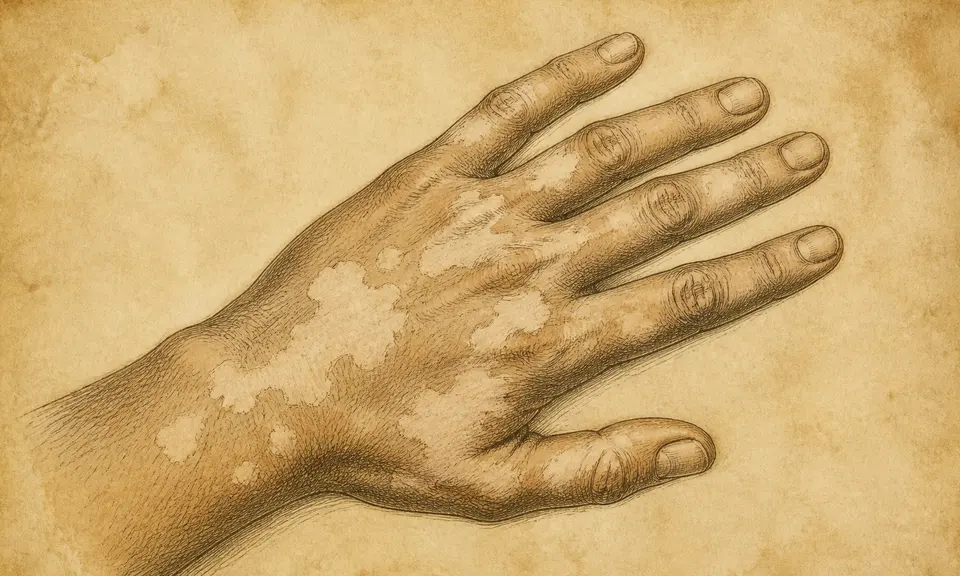
Miller reads the disease as loss on every side: sickness that costs money and earns the displeasure of others, and seeing others afflicted means discouraging prospects and love turning to indifference. an-Nabulsi reads it as gain, and says so without softening it — whoever sees himself leprous will get clothing without adornment, and an inheritance, and leprosy is money. The Arabic reading is reading the white patches as something laid on the skin, the way a garment or an estate is laid on a man, and the English one is reading what the neighbours will do about it. Another Arabic reading takes the disease as money and keeps Miller's one true note, the unjust charge: a leper brings his own work to nothing by his boldness against God and is charged with an ugly thing of which he is innocent. Growing on the body it is much money that stays, or clothing out of an inheritance; at prayer it is the Qur'an forgotten; and the last line says it without a condition — leprosy is riches.
This paragraph was generated by a model. It sums up the sources above, comes from none of them and is attributed to no one.
Whoever saw in his dream that he is leprous will get clothing without adornment, and an inheritance; and leprosy is money.
Section letter ba
Whoever sees in a dream that he is a leper brings his own work to nothing by his boldness against God, and is charged with an ugly matter of which he is innocent. And if it grew in his body, it is much money that stays; and it is said that it is clothing out of an inheritance. Whoever sees that he is at his prayer and is a leper forgets the Qur'an. And leprosy points to unlawful money; and perhaps it points to a fire, because it is blood whose black bile has burned. And leprosy is riches.
Section letter jim
To dream that you are infected with this dread disease, foretells sickness, by which you will lose money and incur the displeasure of others. If you see others afflicted thus, you will meet discouraging prospects and love will turn into indifference.