A man dreamt that he was flaying his own small child and making a wineskin of it. The next day his child fell into a river and was drowned: for a wineskin is made from dead flesh, and it holds liquid.
Passage Book V
2 readings from 2 sources.
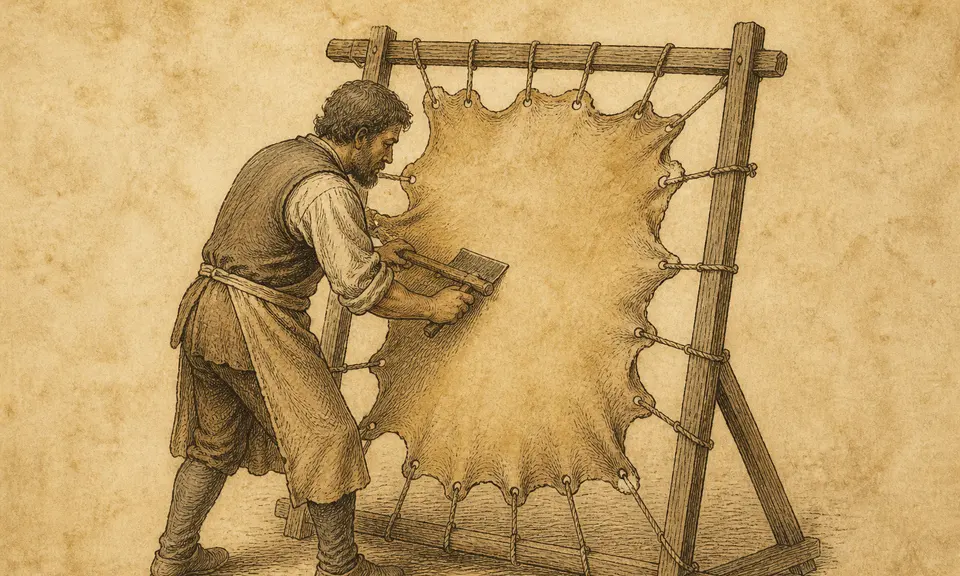
The two readings of the same act land as far apart as this corpus goes. Artemidorus gives a single case and its reasoning: a man dreamt that he was flaying his own small child and making a wineskin of it, and the next day his child fell into a river and was drowned — for a wineskin is made from dead flesh, and it holds liquid. The two halves of the dream answer the two halves of what happened: the dead flesh the death, and the liquid the river. an-Nabulsi reads flaying on the dreamer's own body and reads it well: whoever sees in a dream that his skin was flayed thin between his thighs attains good, or he marries a woman who gives him her wealth, and that is soon. Nothing reconciles the two. In the Greek book the skin comes off someone else and becomes a vessel, and the omen is a death; in the Arabic book it comes off the dreamer, and what follows is a marriage and money.
This paragraph was generated by a model. It sums up the sources above, comes from none of them and is attributed to no one.
A man dreamt that he was flaying his own small child and making a wineskin of it. The next day his child fell into a river and was drowned: for a wineskin is made from dead flesh, and it holds liquid.
Passage Book V
Whoever sees in a dream that his skin was flayed thin between his thighs, he attains good, or he marries a woman who gives him her wealth, and that is soon.
Section letter sin