Obtaining rouge and powder: a daughter will be born.
Section Mirrors, rings, hairpins, bracelets and combs
4 readings from 2 sources.
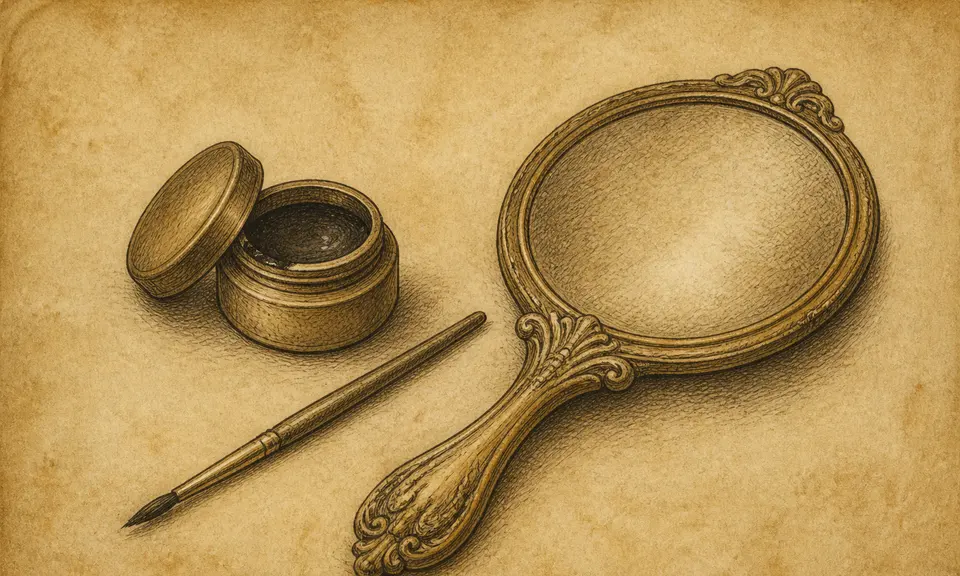
The Chinese dictionary spends three lines on the paint and reads every one of them as a birth or a gain: getting rouge and powder means a daughter will be born, seeing them means great wealth and profit, getting powder means a servant's wife bears a lovely daughter. an-Nabulsi reads the eye paint and makes the dream turn entirely on intent. Kohl is money and an increase of insight into what is right; painted on by a righteous man it is good, by a black man it is not. Painted on to mend the sight, it means a man keeping his faith; painted on for adornment, it means he brings something ornamental into his faith. And the kind matters: antimony joins two women in marriage, foam or froth means the forbidden is being sought, and kohl of blood and ashes is debauchery and a void marriage. The man who paints your eyes and blinds you is taking your money by trickery.
This paragraph was generated by a model. It sums up the sources above, comes from none of them and is attributed to no one.
Obtaining rouge and powder: a daughter will be born.
Section Mirrors, rings, hairpins, bracelets and combs
Seeing rouge and powder: great wealth and profit.
Section Mirrors, rings, hairpins, bracelets and combs
Obtaining powder: a servant's wife bears a lovely daughter.
Section Mirrors, rings, hairpins, bracelets and combs
It is in a dream money, and an increase of insight into what is right. Whoever sees that kohl was put into his hand gets money, be it little or much. Whoever sees a righteous man paint his eyes with it — that is a sign of good; and if a black man paints them, there is no good in it. Whoever sees that he came upon kohl gathered together gets money. Whoever sees that kohl was brought to him to paint his eyes with sets his religion right; and if he is blind, it is his misery. Whoever sees that he painted his eyes with antimony joins two women in marriage. Whoever sees that he paints them with something other than antimony, such as foam or froth, seeks what is forbidden, from the front or from behind. Whoever sees that he paints the boys' eyes with something other than antimony molests them. Whoever sees that he paints his eyes: if his purpose was to mend his sight, he keeps his religion faithfully; and if his purpose was adornment, he brings into his religion something to adorn himself with. Whoever sees a man paint his eyes and blind him — that man takes something of his money by cunning and trickery. A virgin who paints her eyes marries, and so does a widow. And kohl of blood and ashes is debauchery and a marriage that is void.
Section letter kaf