Cloth bound about your hand: illness is coming.
Section Clothes, curtains, blankets, mattresses, spoons and chopsticks
5 readings from 3 sources.
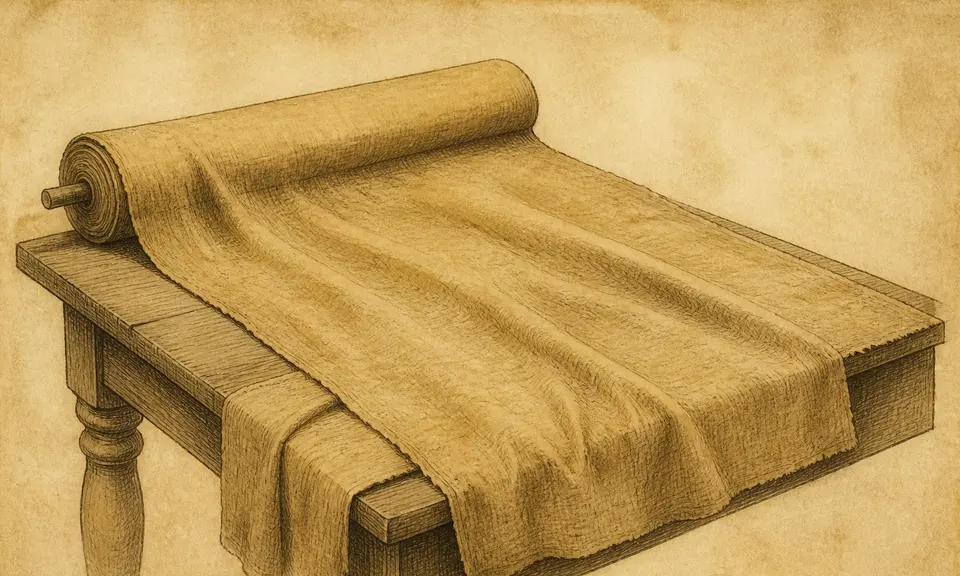
Three books watch a piece of cloth and none of them reads the cloth. Zhougong keeps to the body and to the office: cloth bound about the hand means illness coming, and suddenly holding a fur shoulder wrap means official business arriving. an-Nabulsi reads not the cloth but the tearing of it, and the reading is a point of law — it points to divorce, and to a wife becoming lawful to her husband again without a second husband having lain with her; and under the muslin he has one line that is about time rather than cloth, that it is a return to what a man was upon before. Miller is the only one who reads the stuff itself, and he reads it by its state: seeing linen augurs prosperity, a person dressed in it brings joyful tidings in the nature of an inheritance, clean fine linen on the dreamer assures his fortune, and soiled linen mingles sorrow into the good. So the cloth is almost never the subject in either of them. It is bound, torn, held or worn, and what is read is the change that the handling of it stands for.
This paragraph was generated by a model. It sums up the sources above, comes from none of them and is attributed to no one.
Cloth bound about your hand: illness is coming.
Section Clothes, curtains, blankets, mattresses, spoons and chopsticks
Suddenly holding a fur shoulder-wrap: official business arrives.
Section Clothes, curtains, blankets, mattresses, spoons and chopsticks
It is in a dream a return to what a man was upon before.
Section letter shin
In a dream it points to divorce, and to a woman becoming lawful to her husband again without a second husband having lain with her.
Section letter shin
To see linen in your dream, augurs prosperity and enjoyment. If a person appears to you dressed in linen garments, you will shortly be the recipient of joyful tidings in the nature of an inheritance. If you are apparelled in clean, fine linen, your fortune and fullest enjoyment in life is assured. If it be soiled, sorrow and ill luck will be met with occasionally, mingled with the good in your life.