To dream of having become of clay or of earthenware means death for everyone.
Passage Book I, 50
3 readings from 3 sources.
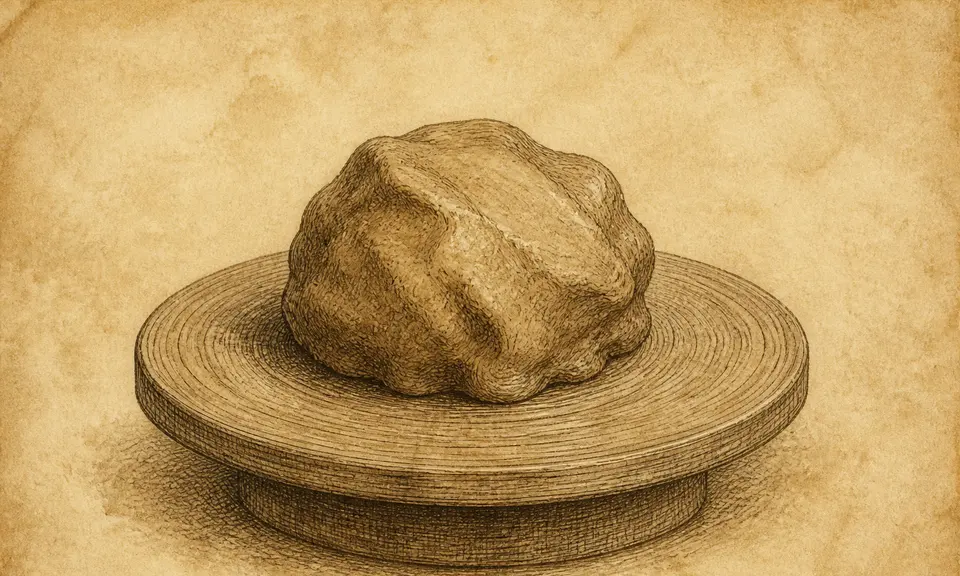
Miller and an-Nabulsi agree on the first word and part company on the second. Clay for Miller is isolation of interest and probable insolvency; for an-Nabulsi it is sickness and humiliation — and the agreement is worth marking, because it is rare in this corpus. After that Miller only digs: digging in a clay bank is submitting to extraordinary demands of enemies, digging in an ash bank and striking clay is an unfortunate surprise that combats new work, and for women the dream is unfavourable in love, in society and in business, with misrepresentations to overwhelm them. an-Nabulsi lets the clay be worked, and the reading turns over as soon as it is. Whoever's living comes from working clay has seen a sign of good; building with clay is religion and certainty. Only clay left dry, with nothing made of it, is a cutting off of wealth. Artemidorus reads neither the material nor the work but a man made of the stuff, and he leaves no second word at all: to dream of having become of clay or of earthenware means death for everyone. Miller reads a material a man sinks into; an-Nabulsi reads a material a man makes something out of.
This paragraph was generated by a model. It sums up the sources above, comes from none of them and is attributed to no one.
To dream of having become of clay or of earthenware means death for everyone.
Passage Book I, 50
It in a dream is sickness and humiliation. And whoever's living is from working clay, it is a sign of good. And building with clay is religion and certainty. And dry clay is a cutting off of wealth.
Section letter ṭa
To dream of clay, denotes isolation of interest and probable insolvency. To dig in a clay bank, foretells you will submit to extraordinary demands of enemies. If you dig in an ash bank and find clay, unfortunate surprises will combat progressive enterprises or new work. Your efforts are likely to be misdirected after this dream. Women will find this dream unfavorable in love, social and business states, and misrepresentations will overwhelm them.