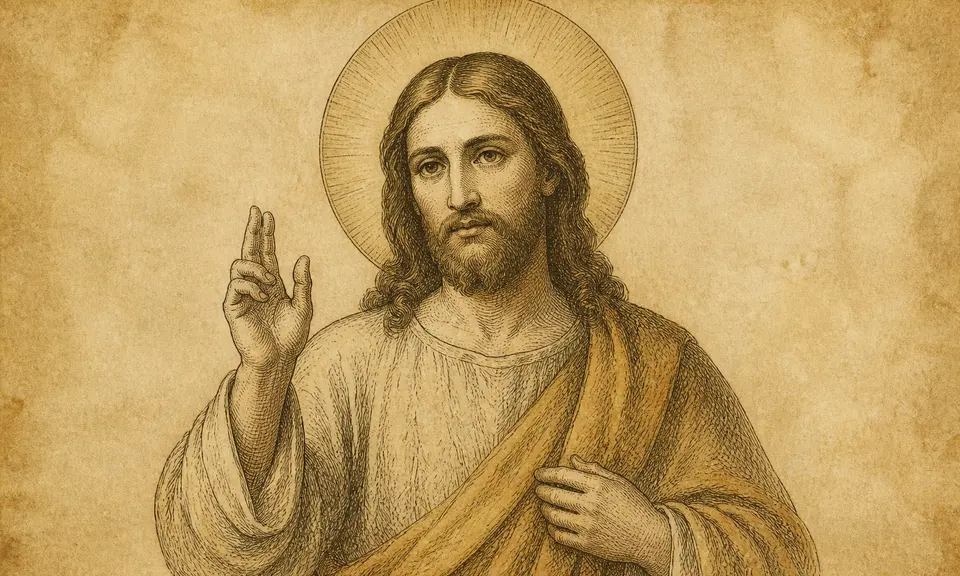
Whoever sees him in a dream will be a blessed man, of much good and much travelling in the pleasure of God, a man of devotion, content with little, and granted the knowledge of how to seek. Whoever sees Jesus is reached by nothing he dislikes in that year, and if he sought something he attained it and became skilled in it. Whoever sees Jesus becomes an ascetic who wanders the earth, and he escapes what he fears and guards against; and whoever sees him often is granted the knowledge of medicine, in a measure without equal in his own time. Whoever sees Jesus in a city or in a great mosque looking at the state the people are in: if they were in hardship or trial, they escape it, because he is the spirit of God and his mercy; and if they were in safety and health, those came down upon them. And if his mother was with him, it is a great sign that appears in that place. Whoever sees that he has grown thin in his likeness, or has put on one of his garments, let him look to his own affair and what suits him: if he was a ruler, his rule is made great; if he was a man of learning or of worship, his usefulness grows and his merits show; if he was a physician, he becomes known and his success grows. And if he saw him while he was afraid, he is made safe. Seeing him points to honour and blessing wherever he comes to rest; and if a sick man sees him, he escapes and is healed; and if you see him while he himself is ill, that points to death. Seeing him points to the appearing of something people marvel at, and to the coming of justice and ease. A woman with child who sees Jesus bears a boy who will be a physician. And seeing Jesus points to doubt in religion and to a division of the word, for the Jews said: we killed him and crucified him, and God said: they did not kill him and they did not crucify him; and the Christians said: the Messiah is the son of God, and God said: God has taken no son. And perhaps seeing him points to the appearing of men of his people. And if the seer was a craftsman or a healer, he profits by it and his affairs are made easy and he gains in his craft. And perhaps the seer is charged with an accusation of which he is innocent, and perhaps a lie is told about him or about his mother. Seeing him with his mother is a sign that wonders will appear. And perhaps seeing Jesus points to good news, because he brought us the good news of the Prophet. And perhaps seeing him points to prayer being answered. And perhaps seeing him points to anger and wrath against the great, because those who asked for the table and then believed neither in it nor in Jesus were turned into swine, as those of the people of Moses who transgressed on the sabbath were turned into apes. And perhaps it points to an ample share of companions or of pupils. And whoever of the small children sees Jesus will live an orphan and be raised in his mother's lap and live a righteous and learned man. And seeing him points to going to and fro from Egypt to Syria and from Syria to Egypt. And if the seer was a bearer of a name at the beginning of his affair, it points to a good end for him, because Jesus comes down from heaven at the end of time and kills the deceiver and fills the earth with justice and fairness as it had been filled with wrong and tyranny. And his coming down in a dream in a place points to justice appearing in that place, and to blessings coming down, and to the perishing of the unbelievers and the victory of the believers.
Section letter ayn