Boys and young men are more profitable to see than old men where actions are concerned; but for matters of trust, men and elders are better than boys and young men, unless they should do or say something out of place.
Passage Book IV
3 readings from 2 sources.
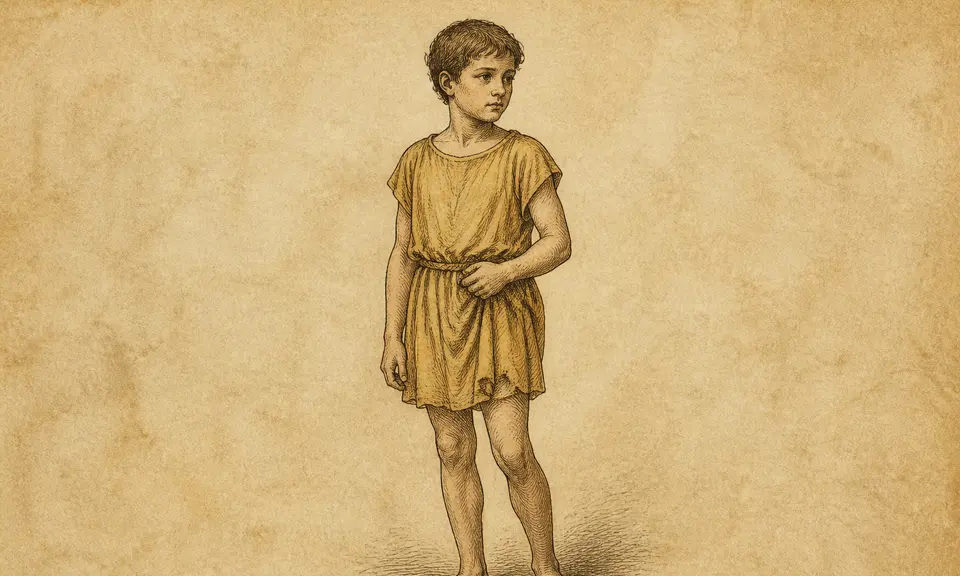
Both books read the boy by his age rather than by anything he does, and then grade him differently. Artemidorus weighs him against the old: boys and young men are more profitable to see than old men where actions are concerned, but for matters of trust, men and elders are better than boys and young men — unless they should do or say something out of place. an-Nabulsi reads the boy as news. Under one word he is glad tidings for whoever saw him, for His saying, exalted be He, 'O good news! This is a boy'; under the other he is graded by how far he has got — an infant that is carried is care and grief, the boy near to manhood is glad tidings, and the boy come of age is might and strength. And there is one reading for a whole town: if the place was besieged and the people in hardship, and someone saw that a boy of fair form entered the city or came down from the sky or came out of the earth, then the glad tidings and the relief have drawn near for the people of that place. The one disagreement is over the smallest child: the Arabic book puts care and grief on the infant in arms, and the Greek book, which weighs boys only against old men, says nothing about him.
This paragraph was generated by a model. It sums up the sources above, comes from none of them and is attributed to no one.
Boys and young men are more profitable to see than old men where actions are concerned; but for matters of trust, men and elders are better than boys and young men, unless they should do or say something out of place.
Passage Book IV
He in a dream is glad tidings for whoever saw him, for His saying, exalted be He: 'O good news! This is a boy.'
Section letter ghayn
It in a dream is care and grief if he is an infant that is carried. And the boy near to manhood is glad tidings. And if the town was besieged and the people in hardship, and someone saw that a boy of fair form entered the city or came down from the sky or came out of the earth, then the glad tidings have drawn near, and the relief, for the people of that place. And the boy come of age is might and strength.
Section letter ṣad