highly auspicious
Bowing to an elder or a superior: greatly auspicious and prosperous.
Section Body, face, teeth and hair
5 readings from 2 sources.
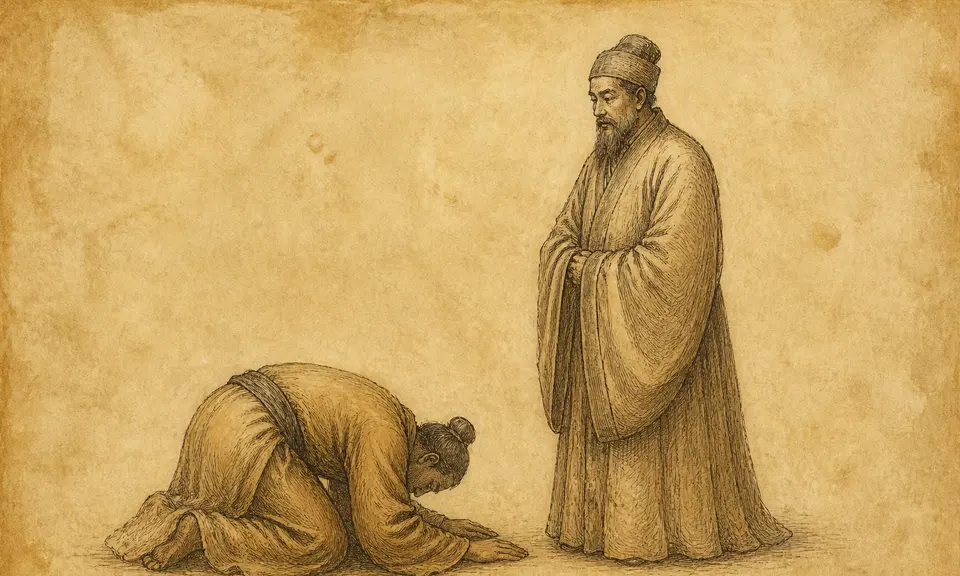
Zhougong reads the bow by who receives it: bowing to an elder or a superior is greatly auspicious, bowing one's head to somebody makes a hundred things auspicious — and husband and wife bowing to one another means separation, which is the one dark line in his four. an-Nabulsi reads the bow in prayer and nothing else: whoever bows and prays humbles himself, is quit of pride, keeps God's bounds and quickly gets what he wishes. His sharpest case is the man who is at prayer and lets the time for the bow pass — that man does not pay the alms-due.
This paragraph was generated by a model. It sums up the sources above, comes from none of them and is attributed to no one.
highly auspicious
Bowing to an elder or a superior: greatly auspicious and prosperous.
Section Body, face, teeth and hair
auspicious
Bowing to an elder: auspicious celebration.
Section Emperors, civil and military officials, and summonses
Husband and wife bowing to one another: separation.
Section Husband and wife, birth, pregnancy and intercourse
auspicious
Bowing your head to someone: a hundred things auspicious.
Section Being harmed, fighting, wounding, beating and cursing
Whoever sees in a dream that he bows and prays to God humbles himself before Him and is quit of pride, and keeps God's bounds and duties, and prays much, and quickly attains what he wishes in religion and in the world, and overcomes whoever was his enemy. And whoever sees that he is at prayer and does not bow until its time has gone does not pay the alms-due. And bowing in a dream is service for the idle man; and perhaps bowing points to a long life and to stooping. And if a woman sees that she bows a full bow, it points to repentance and to her name being raised by her modesty.
Section letter ra