Beet, mallow, sorrel, sour sorrel and orach are good only for men sunk in debt, because they stir up the belly and drive out the dung lying in it; for the belly and the bowels are properly like a creditor.
Passage Book I, 67
2 readings from 2 sources.
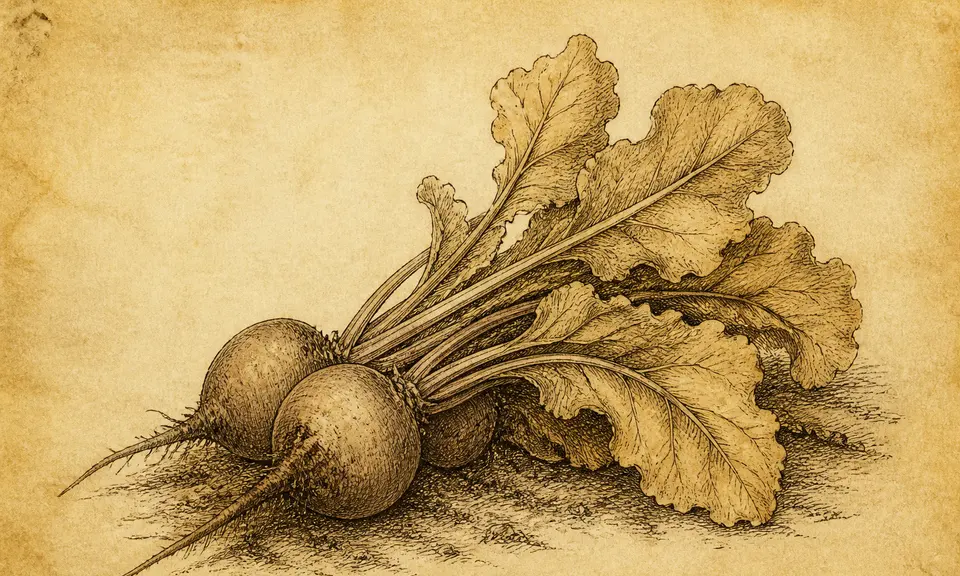
Artemidorus narrows the good to one kind of man and gives the reason without delicacy: beet, mallow, sorrel, sour sorrel and orach are good only for men sunk in debt, because they stir up the belly and drive out the dung lying in it, and the belly and the bowels are properly like a creditor. Miller reads the beet where it grows and where it is served: seen growing abundantly it means harvest and peace will obtain in the land, eaten with others it is full of good tidings, and served in soiled or impure dishes it brings distressful awakenings. One book makes the vegetable good for the indebted alone and arrives at that through the bowels; the other makes it good for a whole country and spoils it only by the dish it comes in.
This paragraph was generated by a model. It sums up the sources above, comes from none of them and is attributed to no one.
Beet, mallow, sorrel, sour sorrel and orach are good only for men sunk in debt, because they stir up the belly and drive out the dung lying in it; for the belly and the bowels are properly like a creditor.
Passage Book I, 67
To see them growing abundantly, harvest and peace will obtain in the land; eating them with others, is full of good tidings. If they are served in soiled or impure dishes, distressful awakenings will disturb you.