Almonds

2 readings from 2 sources.

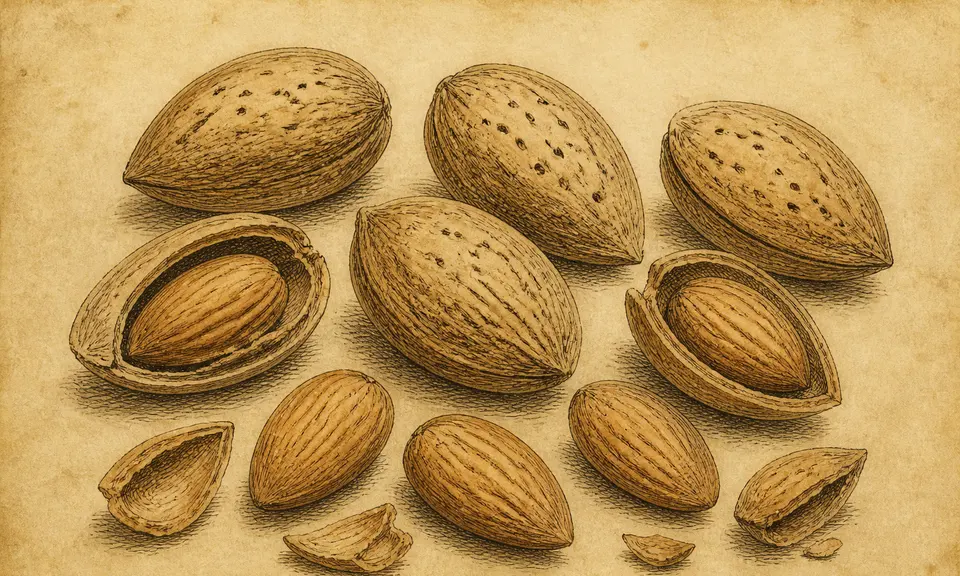
The image was generated by a model. It is not a period engraving and comes from none of the sources.

Miller is brief and warm: almonds are a good omen with wealth in store, though sorrow goes with it for a short while, and defective almonds mean a wish disappointed until conditions change. an-Nabulsi reads the name backwards — because the Arabic for almond reversed gives the word for “it passed” — and so the almond is sicknesses passing off, or dismissal and the loss of office. It may be the dead man in his shroud or his grave, unless the almond is green. The sweet almond is lawful money got with a quarrel in it; the sweet of the tree is the sweetness of faith and the bitter of it true speech.

This paragraph was generated by a model. It sums up the sources above, comes from none of them and is attributed to no one.

Arabic dream book

In a dream it points to sicknesses passing off, or to dismissal and the loss of office, because its name reversed is “it passed”. And the almond may point to the dead man in his shroud, or to himself, or to his grave — unless the almond is green, for then, in its season, it points to good. The sweet almond points to lawful money in the measure of how little or how much there is of it; whoever saw that he was eating of it is given money with a quarrel in it, and whoever took almonds from a tree comes by money with a quarrel from a stingy man. The almond tree is a man stingy with people and mean to his own household; the sweet of it is the sweetness of faith and the bitter of it is true speech. Whoever ate almonds comes by money together with soundness of body. And the almond tree is a stranger. And whoever sees almond shells scattered over him comes by clothing. And it is said dry almonds point to uproar and ill, for the sound of their rattling, and they point to sorrow. And whoever ate of its leaves ate pleasant money from a man of the ruler's household.

Section letter lam

The Perfuming of Mankind in the Interpretation of Dreams

Abd al-Ghani al-Nabulsi

before 1731; first printed Cairo 1858 · Arab-Islamic

carries the ancient tradition after Artemidorus

About this source

An Arabic dream book by the Damascene scholar al-Nabulsi, an alphabetical dictionary of two and a half thousand headwords. It draws on the ancient tradition directly: Artemidorus was translated into Arabic by Hunayn ibn Ishaq in the ninth century. The readings here almost always address the dreamer’s standing, property and faith rather than their feelings.

Rights: public domain

Where the text is from: https://shamela.ws/book/1217

Miller

This is a good omen. It has wealth in store. However, sorrow will go with it for a short while. If the almonds are defective, your disappointment in obtaining a certain wish will be complete until new conditions are brought about.

Ten Thousand Dreams Interpreted; Or, What's in a Dream

Gustavus Hindman Miller

1901 · American Victorian

carries fragments of the ancient tradition without its system

About this source

An American dream book, the only one here that knows the telephone, the railroad or the elevator. Doctrinally it is the most degraded: it keeps fragments of the ancient tradition without the system that once held them together.

Rights: public domain

Where the text is from: https://www.gutenberg.org/ebooks/926