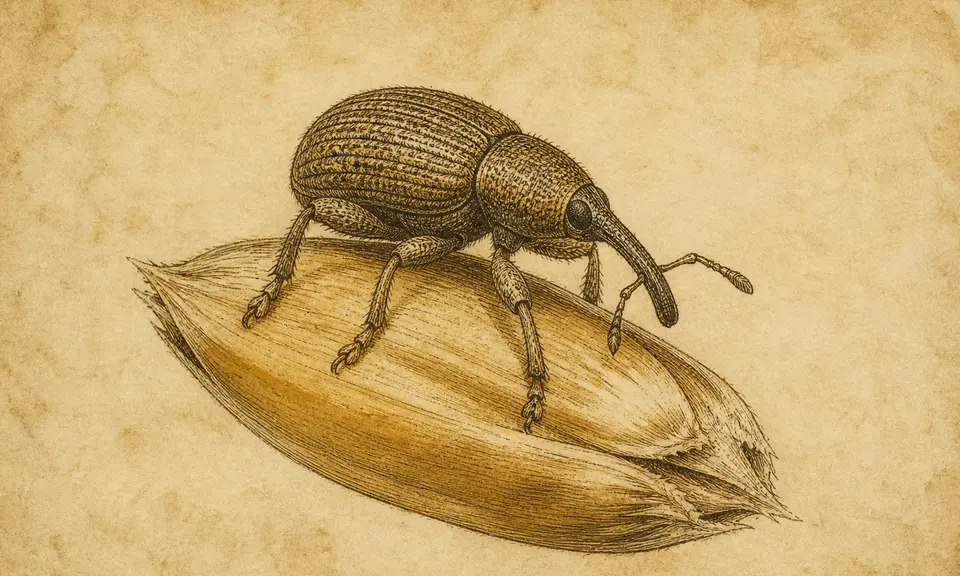
Weevil

2 readings from 2 sources.

The image was generated by a model. It is not a period engraving and comes from none of the sources.

Miller gives the weevil one sentence: loss in trade and falseness in love. an-Nabulsi gives it a page and every line of it is about someone close. The weevil is a slanderer working against rich men to cut off their benefit; a sick man who sees it in his house or sticking to his body dies; in the door, the bed or the table it is sickness in the body of whoever sees it; it may mean many dependants and little money, for the saying that dependants are the weevil of money; and it is an enemy from within the family. The insect that eats from inside is read as trade in one book and as kin in the other.

This paragraph was generated by a model. It sums up the sources above, comes from none of them and is attributed to no one.

Arabic dream book

In a dream it is a slanderer who works against rich men in order to cut their benefit off from them. If a sick man saw the weevil in his house or sticking to his body, he dies. The weevil in the door or the bed or the table is sickness and ailment in the body of the one who sees it. And the weevil may point to many dependants and little money, for their saying: dependants are the weevil of money. And the weevil is an enemy from within the family.

Section letter sin

The Perfuming of Mankind in the Interpretation of Dreams

Abd al-Ghani al-Nabulsi

before 1731; first printed Cairo 1858 · Arab-Islamic

carries the ancient tradition after Artemidorus

About this source

An Arabic dream book by the Damascene scholar al-Nabulsi, an alphabetical dictionary of two and a half thousand headwords. It draws on the ancient tradition directly: Artemidorus was translated into Arabic by Hunayn ibn Ishaq in the ninth century. The readings here almost always address the dreamer’s standing, property and faith rather than their feelings.

Rights: public domain

Where the text is from: https://shamela.ws/book/1217

Miller

To dream of weevils, portends loss in trade and falseness in love.

Ten Thousand Dreams Interpreted; Or, What's in a Dream

Gustavus Hindman Miller

1901 · American Victorian

carries fragments of the ancient tradition without its system

About this source

An American dream book, the only one here that knows the telephone, the railroad or the elevator. Doctrinally it is the most degraded: it keeps fragments of the ancient tradition without the system that once held them together.

Rights: public domain

Where the text is from: https://www.gutenberg.org/ebooks/926