Seeing it in a dream points to provision and to true news; and perhaps it points to the harvest of a man's life.
Section letter mim
2 readings from 2 sources.
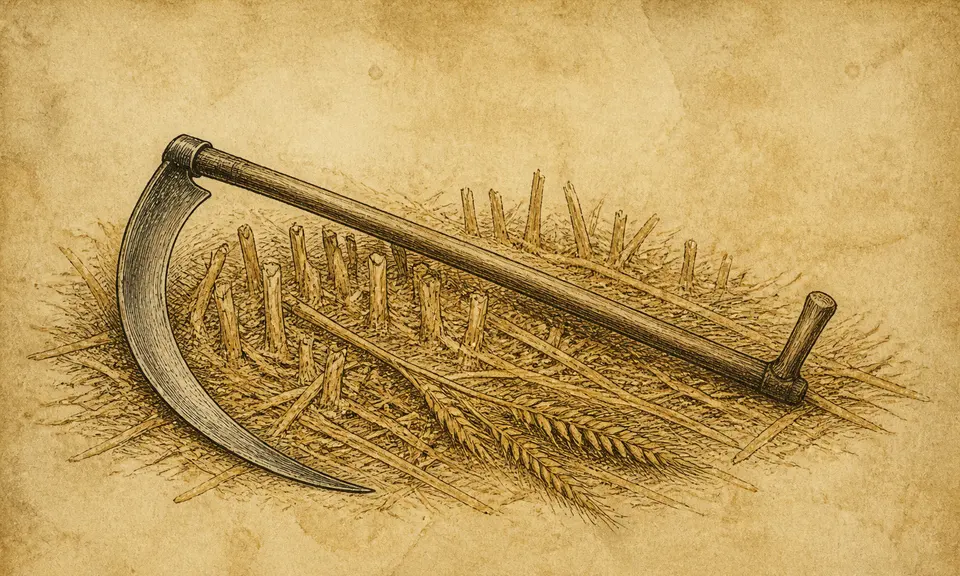
Miller reads the scythe as something that stops the dreamer: it foretells accidents or sickness keeping him from his affairs or his journeys, and an old or broken one means separation from friends or a business failure. an-Nabulsi reads the same blade as the crop it brings in — provision and true news — and then turns it on the man holding it: perhaps it points to the harvest of his life. The tool that cuts the field is read in one book as the thing that interrupts a life and in the other as the thing that gathers it.
This paragraph was generated by a model. It sums up the sources above, comes from none of them and is attributed to no one.
Seeing it in a dream points to provision and to true news; and perhaps it points to the harvest of a man's life.
Section letter mim
To dream of a scythe, foretells accidents or sickness will prevent you from attending to your affairs, or making journeys. An old or broken scythe, implies separation from friends, or failure in some business enterprise.