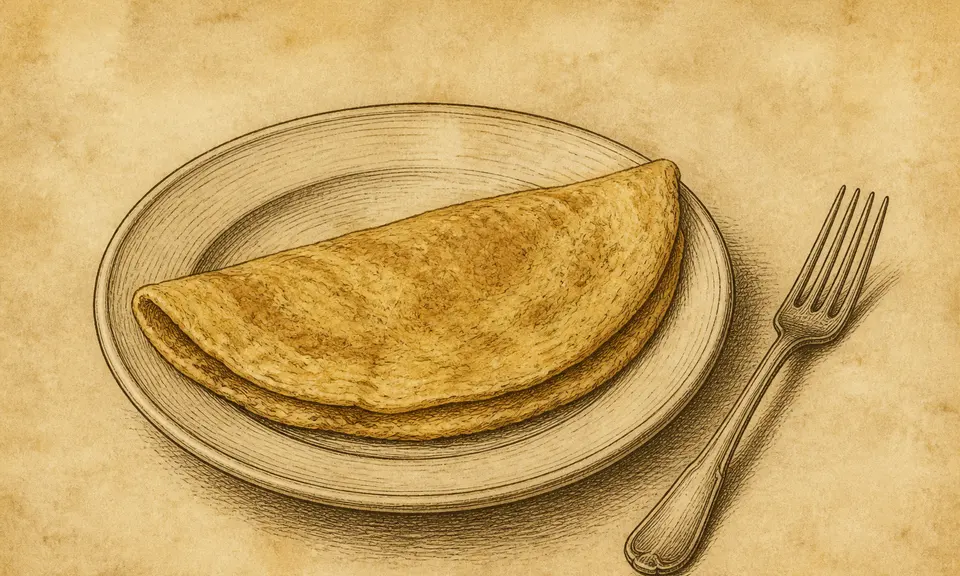
Omelet

2 readings from 2 sources.

The image was generated by a model. It is not a period engraving and comes from none of the sources.

Miller reads the omelet as something served with a motive: seeing one served warns of flattery and deceit about to be used on the dreamer, and eating it means being imposed upon by somebody who seems worthy of trust. an-Nabulsi reads the same dish as plain good news — might, joys, gladnesses, provision, and a wife for the man who has none. Eggs beaten and folded over nothing are a trick in one book and a small feast in the other.

This paragraph was generated by a model. It sums up the sources above, comes from none of them and is attributed to no one.

Arabic dream book

It is in a dream a sign of might and of joys and gladnesses and provisions, and of a wife for the man who has none.

Section letter ayn

The Perfuming of Mankind in the Interpretation of Dreams

Abd al-Ghani al-Nabulsi

before 1731; first printed Cairo 1858 · Arab-Islamic

carries the ancient tradition after Artemidorus

About this source

An Arabic dream book by the Damascene scholar al-Nabulsi, an alphabetical dictionary of two and a half thousand headwords. It draws on the ancient tradition directly: Artemidorus was translated into Arabic by Hunayn ibn Ishaq in the ninth century. The readings here almost always address the dreamer’s standing, property and faith rather than their feelings.

Rights: public domain

Where the text is from: https://shamela.ws/book/1217

Miller

To see omelet being served in your dream, warns you of flattery and deceit, which is about to be used against you. To eat it, shows that you will be imposed upon by some one seemingly worthy of your confidence.

Ten Thousand Dreams Interpreted; Or, What's in a Dream

Gustavus Hindman Miller

1901 · American Victorian

carries fragments of the ancient tradition without its system

About this source

An American dream book, the only one here that knows the telephone, the railroad or the elevator. Doctrinally it is the most degraded: it keeps fragments of the ancient tradition without the system that once held them together.

Rights: public domain

Where the text is from: https://www.gutenberg.org/ebooks/926