In summer it is in a dream cares and troubles and a beating; and the porridge is grief coming from his workmen. And if he sees that he prays and eats porridge, he kisses his wife while he is fasting.
Section letter ayn
2 readings from 2 sources.
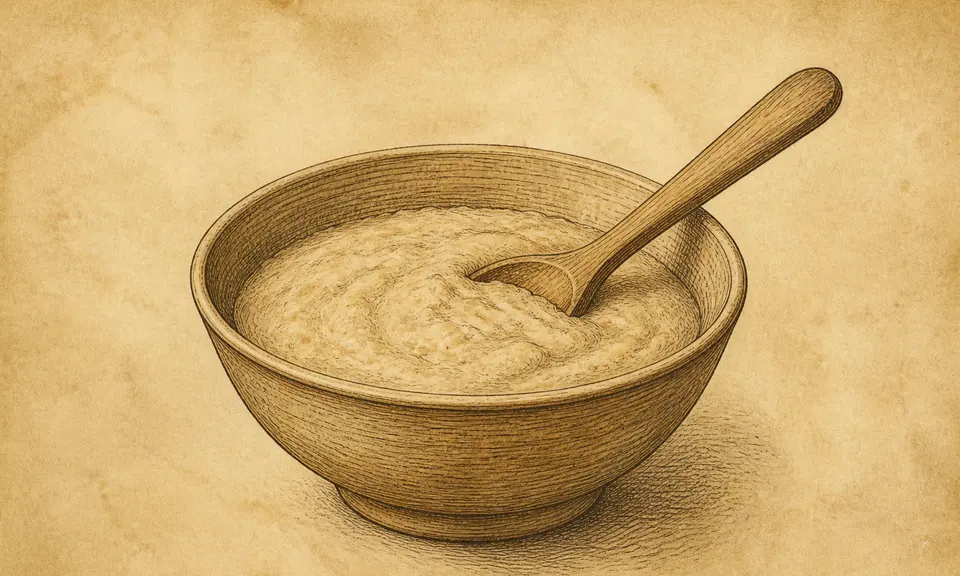
Miller reads the porridge as a plain reward: eating it means enjoying a fortune that was worthily earned, and a young woman preparing it will soon preside over the destiny of others. an-Nabulsi reads the same bowl in the heat and turns it sour: in summer it is cares and troubles and a beating, and the porridge is grief coming from the dreamer's own workmen. His last line is the strangest in the reading — a man who dreams he prays and eats porridge is kissing his wife while fasting.
This paragraph was generated by a model. It sums up the sources above, comes from none of them and is attributed to no one.
In summer it is in a dream cares and troubles and a beating; and the porridge is grief coming from his workmen. And if he sees that he prays and eats porridge, he kisses his wife while he is fasting.
Section letter ayn
To dream of eating oatmeal, signifies the enjoyment of worthily earned fortune. For a young woman to dream of preparing it for the table, denotes that she will soon preside over the destiny of others.