Millet and panic grass and spelt mean poverty and want.
Passage Book I, 68
2 readings from 2 sources.
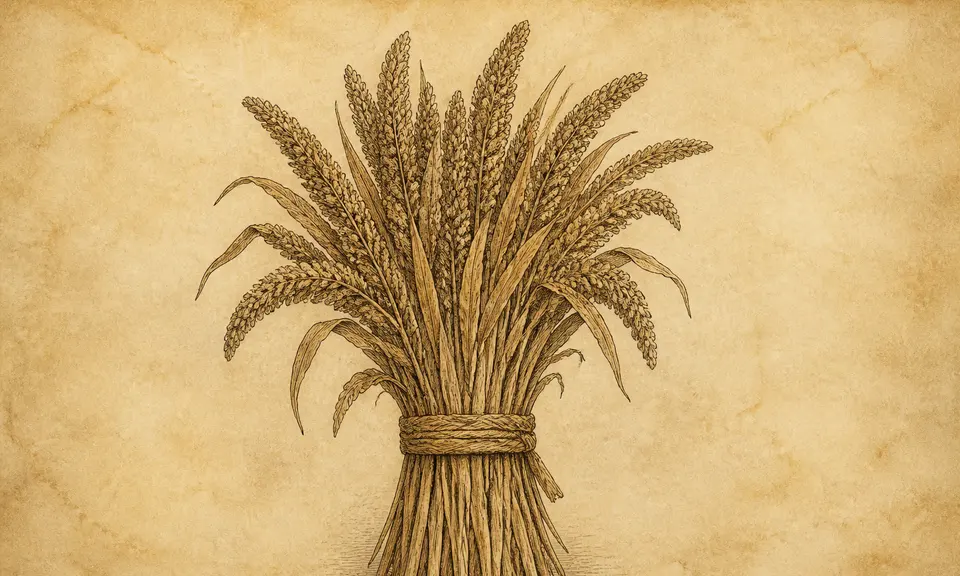
Two lines that stand against each other — and one of them stands against itself as well. Artemidorus counts millet together with panic grass and spelt and reads them as poverty and want. an-Nabulsi starts from the exact opposite: millet is wealth that mingles with other wealth, and the same holds for the rest of the grains. Then he adds a second opinion and marks it as reported — it is said that millet points to destitution and to wealth going away — and with that he ends up on the Greek side. The exception he attaches is nowhere else: it is good only for the man whose livelihood is from fire alone.
This paragraph was generated by a model. It sums up the sources above, comes from none of them and is attributed to no one.
Millet and panic grass and spelt mean poverty and want.
Passage Book I, 68
In a dream it is wealth that mingles with other wealth, and so are the rest of the grains. And it is said that millet points to destitution and to the going away of wealth, and it is good only for him whose livelihood is from fire alone.
Section letter dal