Mime-actors, and all who raise laughter, signify deceits and ambushes.
Passage Book I, 76
4 readings from 3 sources.
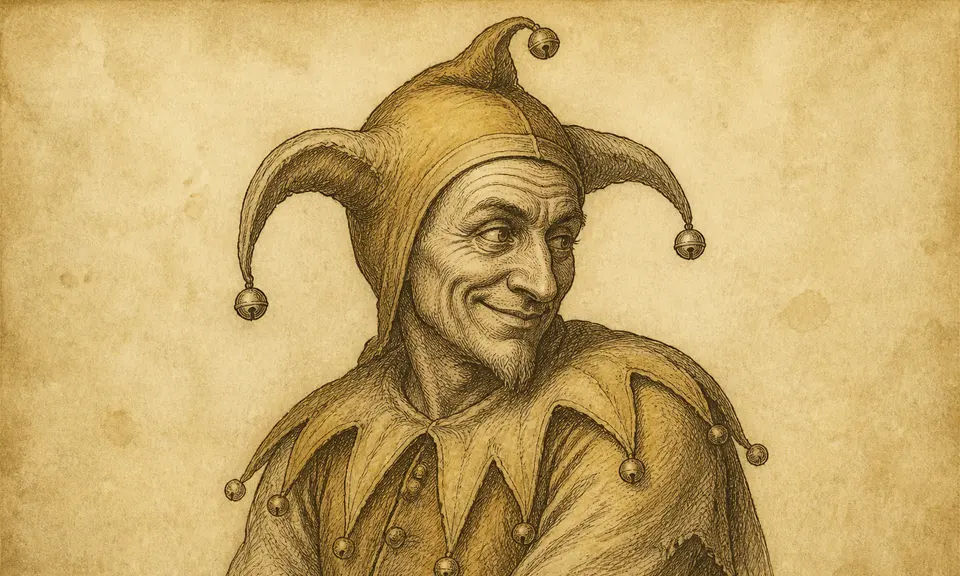
All three books read the jester as a man who is not what he seems, and they disagree about who is fooled. Miller warns the dreamer about himself: a jester means you will ignore important things while looking after silly affairs. Artemidorus has no doubt about it — mime-actors and all who raise laughter signify deceits and ambushes, and to play the jester, to act mimes, to play a part means that one will deceive somebody. an-Nabulsi reads the figure as a deception and a trick by which people are deceived — and then, in the same line, as a person who is mocked. The Arabic reading holds both ends of the profession at once, the man who makes fools and the man made a fool of, which is the whole difficulty of the trade in nine words.
This paragraph was generated by a model. It sums up the sources above, comes from none of them and is attributed to no one.
Mime-actors, and all who raise laughter, signify deceits and ambushes.
Passage Book I, 76
To play the jester, to act mimes, to play a part means that one will deceive somebody.
Passage Book I, 77
Seeing him in a dream points to a deception and a trick by which people are deceived, and to a person who is mocked.
Section letter mim
To dream of a jester, foretells you will ignore important things in looking after silly affairs.