Whoever saw freckles on his face in a dream: they are his sins, of which he has done many and which he committed before people for the sake of money.
Section letter nun
2 readings from 2 sources.
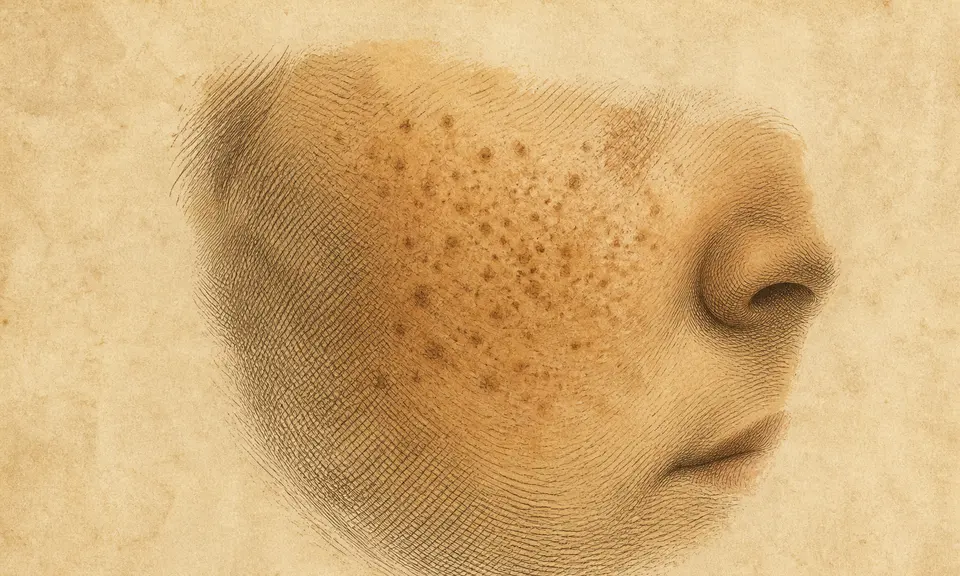
Both books put the marks on a face and read them as something the world will see. Miller gives them to a woman: a freckled face means displeasing incidents working their way into her happiness, and seeing them in a mirror means the danger of losing her lover to a rival. an-Nabulsi gives them to a man and makes them a reckoning — the freckles are his sins, of which he has done many, and which he committed in front of people for the sake of money. The mirror and the ledger are the same spot on the skin.
This paragraph was generated by a model. It sums up the sources above, comes from none of them and is attributed to no one.
Whoever saw freckles on his face in a dream: they are his sins, of which he has done many and which he committed before people for the sake of money.
Section letter nun
For a woman to dream that her face is freckled, denotes that many displeasing incidents will insinuate themselves into her happiness. If she sees them in a mirror, she will be in danger of losing her lover to a rival.