Flour and barley meal mean the same as loaves, but less so.
Passage Book I, 69
3 readings from 3 sources.
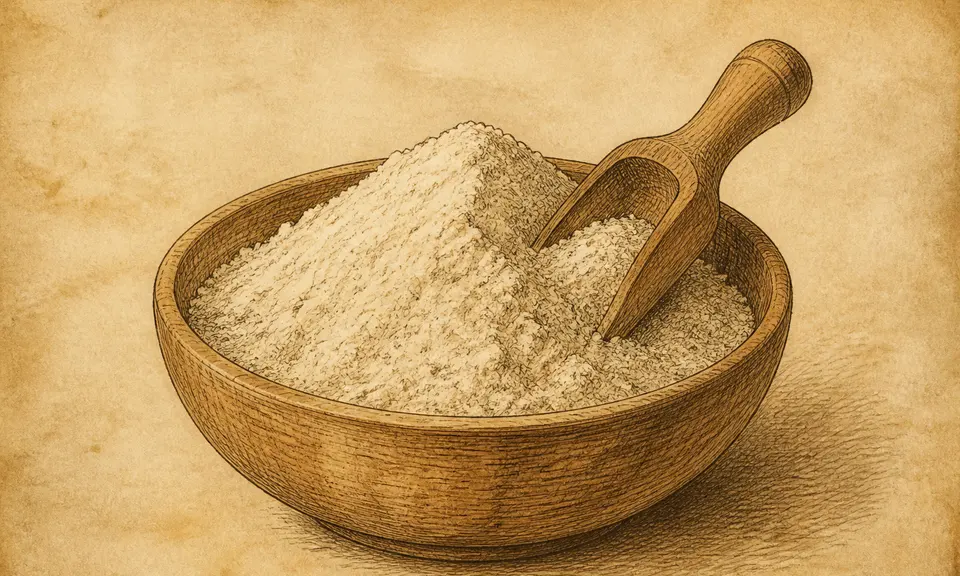
Miller reads the flour as a frugal but happy life, with flour on a young woman meaning a husband who rules her and a life of pleasant cares, and dealing in flour meaning hazardous speculation. Artemidorus reads the flour by reference to the bread made of it, and in one line: flour and barley meal mean the same as loaves, but less so. an-Nabulsi sorts it by grain and gets a whole shelf of readings out of one sack: wheat flour is money gathered and a household, rice flour is favour, fine semolina is a fitting husband, and the flour of anything but wheat is healing from illness — though eating that same flour is want and poverty. Kneading it is a journey to one's relatives.
This paragraph was generated by a model. It sums up the sources above, comes from none of them and is attributed to no one.
Flour and barley meal mean the same as loaves, but less so.
Passage Book I, 69
In a dream it is provision; and rice flour is favour; and fine semolina is a fitting husband for an unmarried woman. And perhaps flour points to healing from illnesses, and to money and trade and strong equipment and the well-defended fortress and religion and guidance. And the flour of anything other than wheat is healing from illnesses, and eating it is want and poverty. And wheat flour is money gathered and a household, and kneading it is its owner's journey to his relatives. And whoever sees that he kneads barley flour is a believing man, and he gets an office and victory over enemies.
Section letter dal
To dream of flour, denotes a frugal but happy life. For a young woman to dream that she sees flour on herself, denotes that she will be ruled by her husband, and that her life will be full of pleasant cares. To dream of dealing in flour, denotes hazardous speculations.