It is the bride-price; and whoever in a dream pays a dower to a woman he does not know in waking has discharged an obligation laid upon him — a fast, or a prayer, or the pilgrimage.
Section letter ṣad
2 readings from 2 sources.
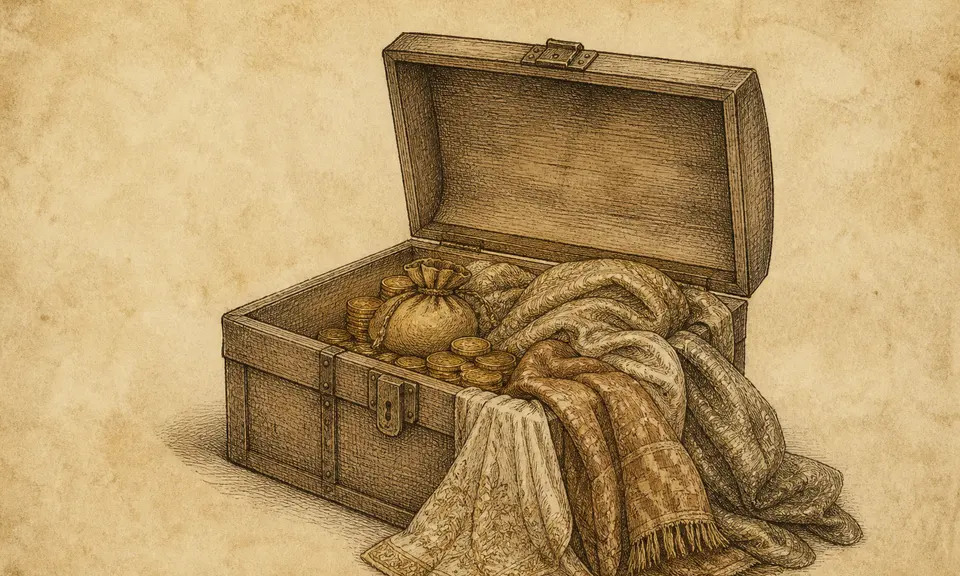
Miller reads the dowry as money that does or does not arrive: failing to receive one means penury and a cold world to live in, receiving it means the day's expectations fulfilled — and then he adds the cautious note that the opposite may hold if the dream was brought on by the waking mind's own preoccupation. an-Nabulsi reads the payment rather than the receipt, and turns it into religion: whoever pays a dower to a woman he does not know in waking has discharged an obligation owed — a fast, a prayer or the pilgrimage.
This paragraph was generated by a model. It sums up the sources above, comes from none of them and is attributed to no one.
It is the bride-price; and whoever in a dream pays a dower to a woman he does not know in waking has discharged an obligation laid upon him — a fast, or a prayer, or the pilgrimage.
Section letter ṣad
To dream that you fail to receive a dowry, signifies penury and a cold world to depend on for a living. If you receive it, your expectations for the day will be fulfilled. The opposite may be expected if the dream is superinduced by the previous action of the waking mind.